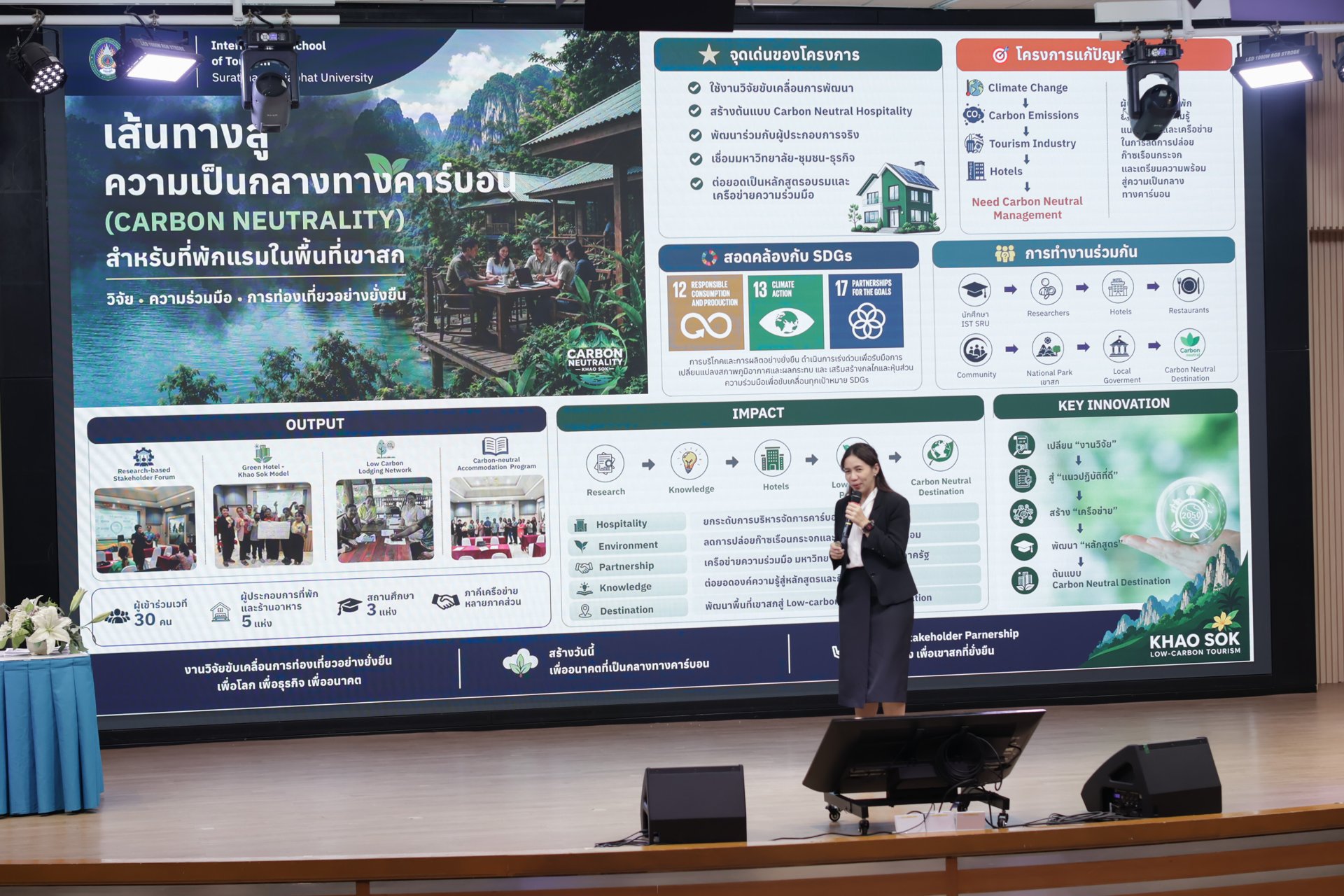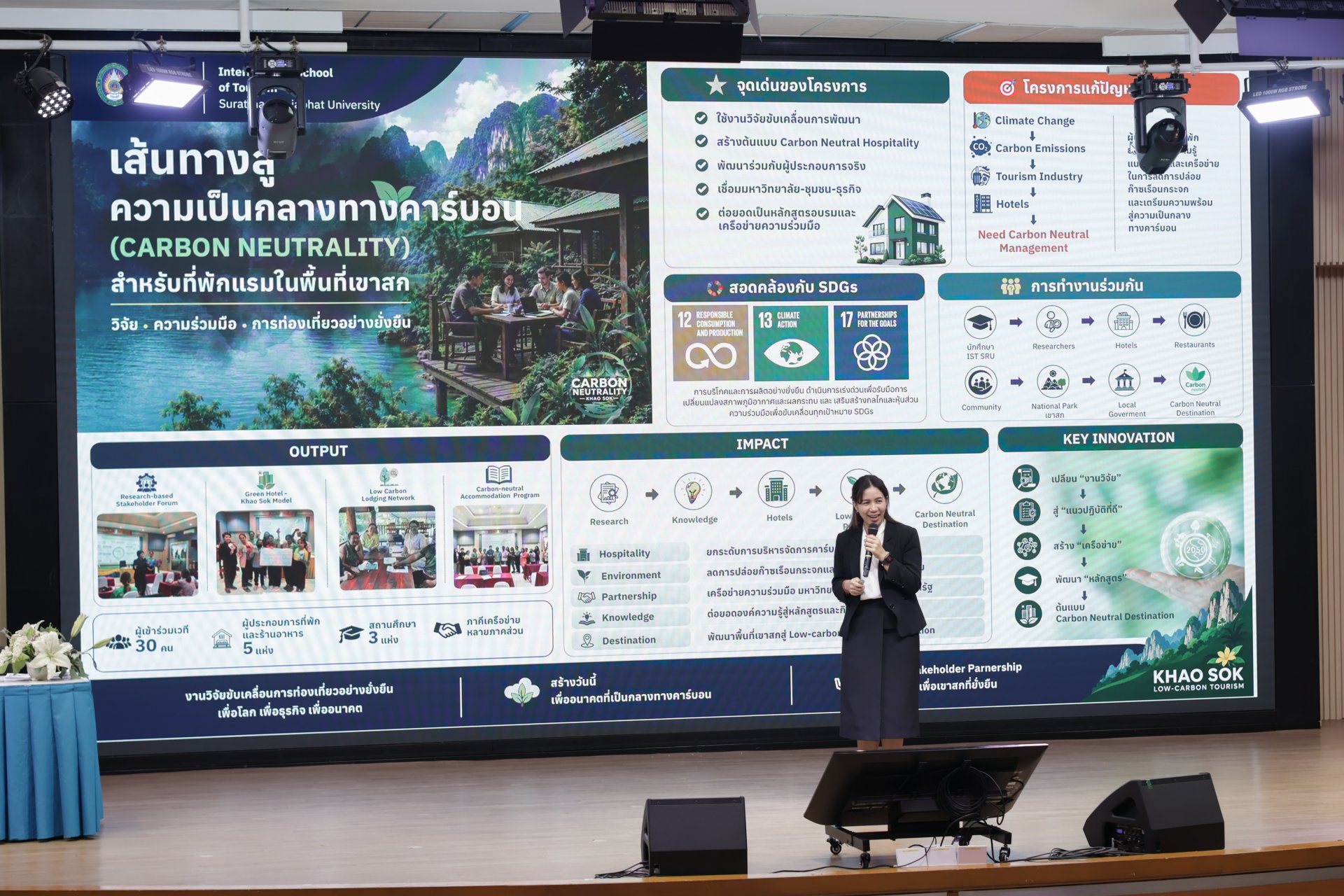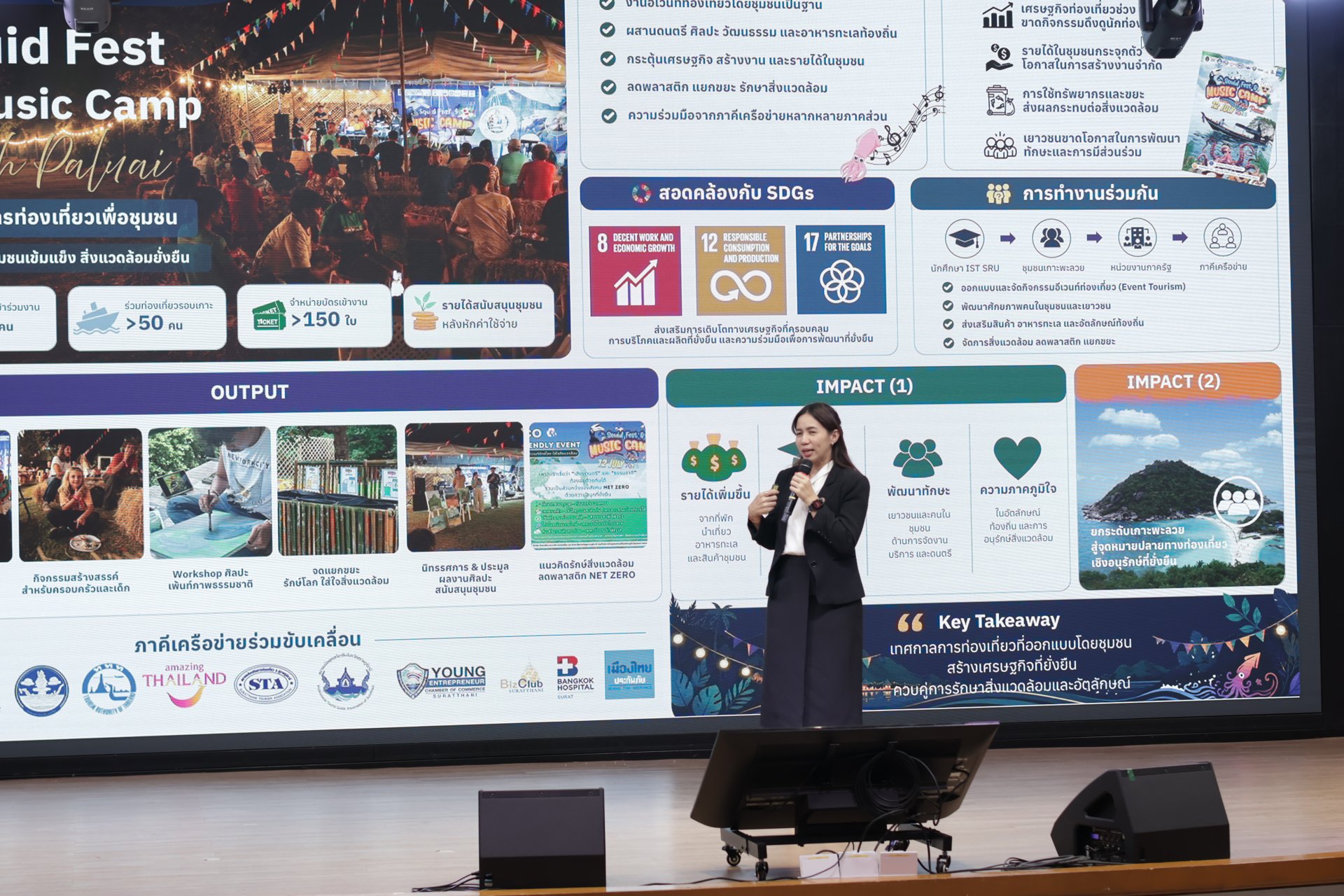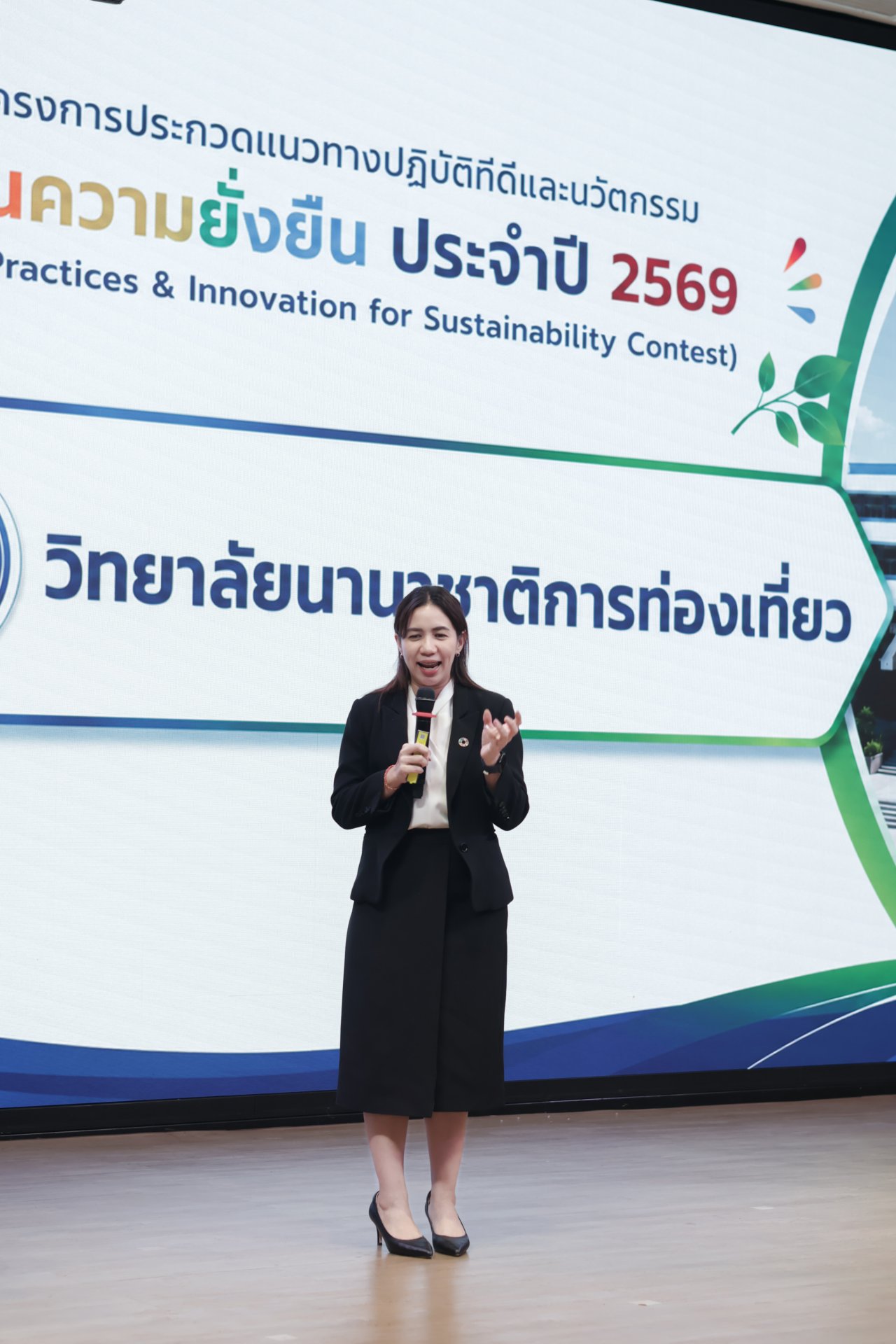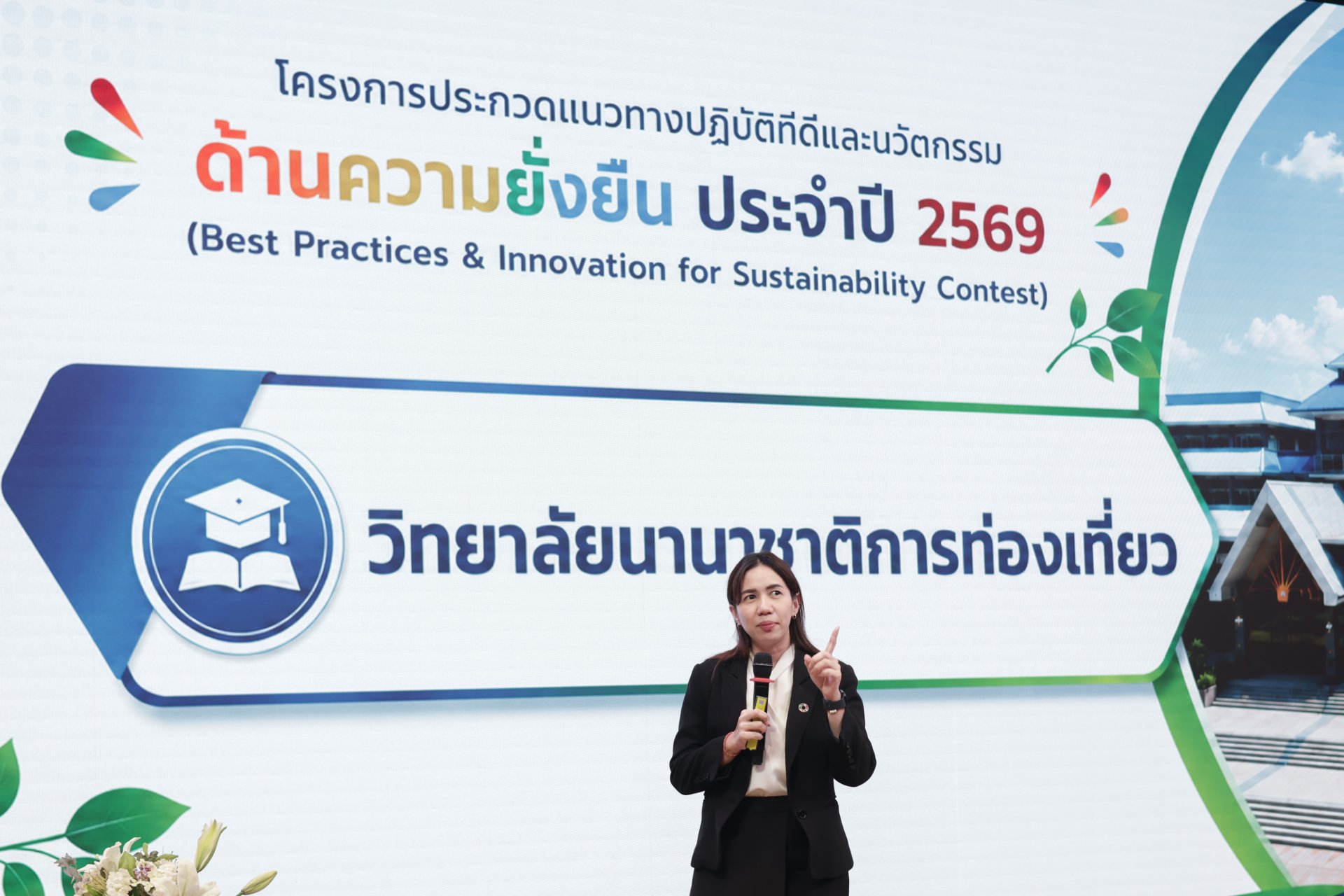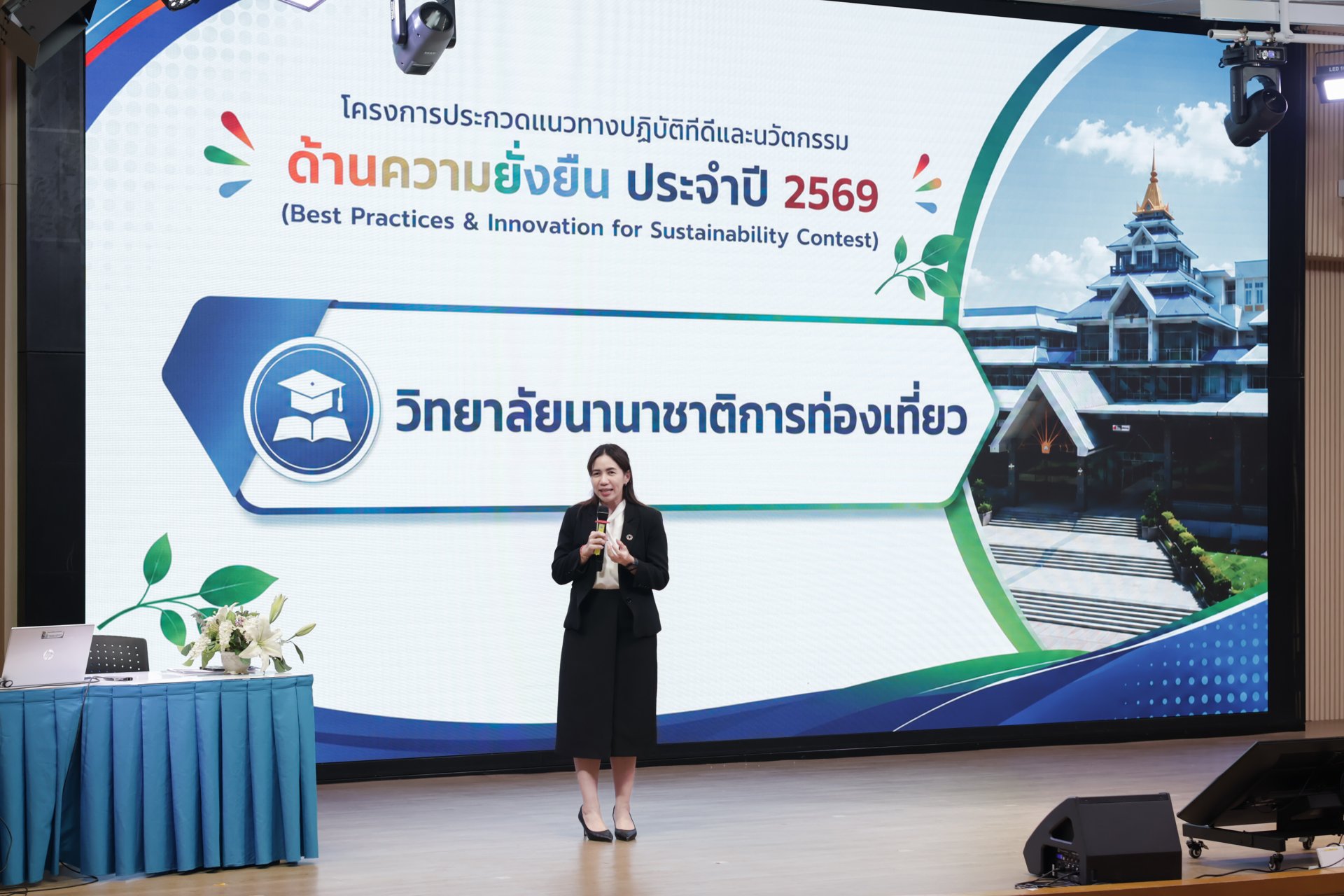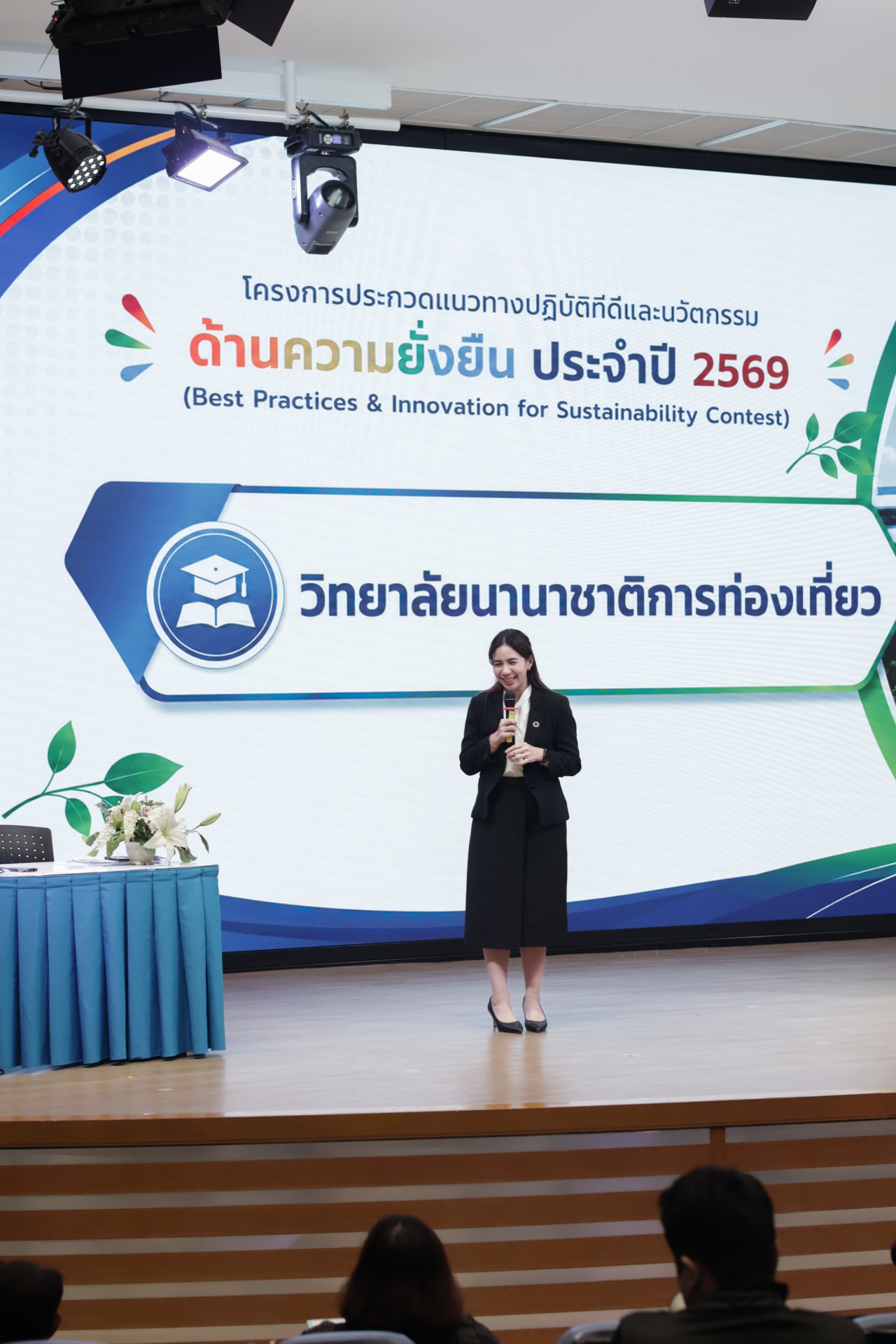
IST Dean Presents Four Best Practices Advancing Sustainable Tourism and Education
Participation in the 2026 Best Practices & Innovation for Sustainability Contest, showcasing outcomes created through the integration of education, research, academic services, and multi-stakeholder partnerships.
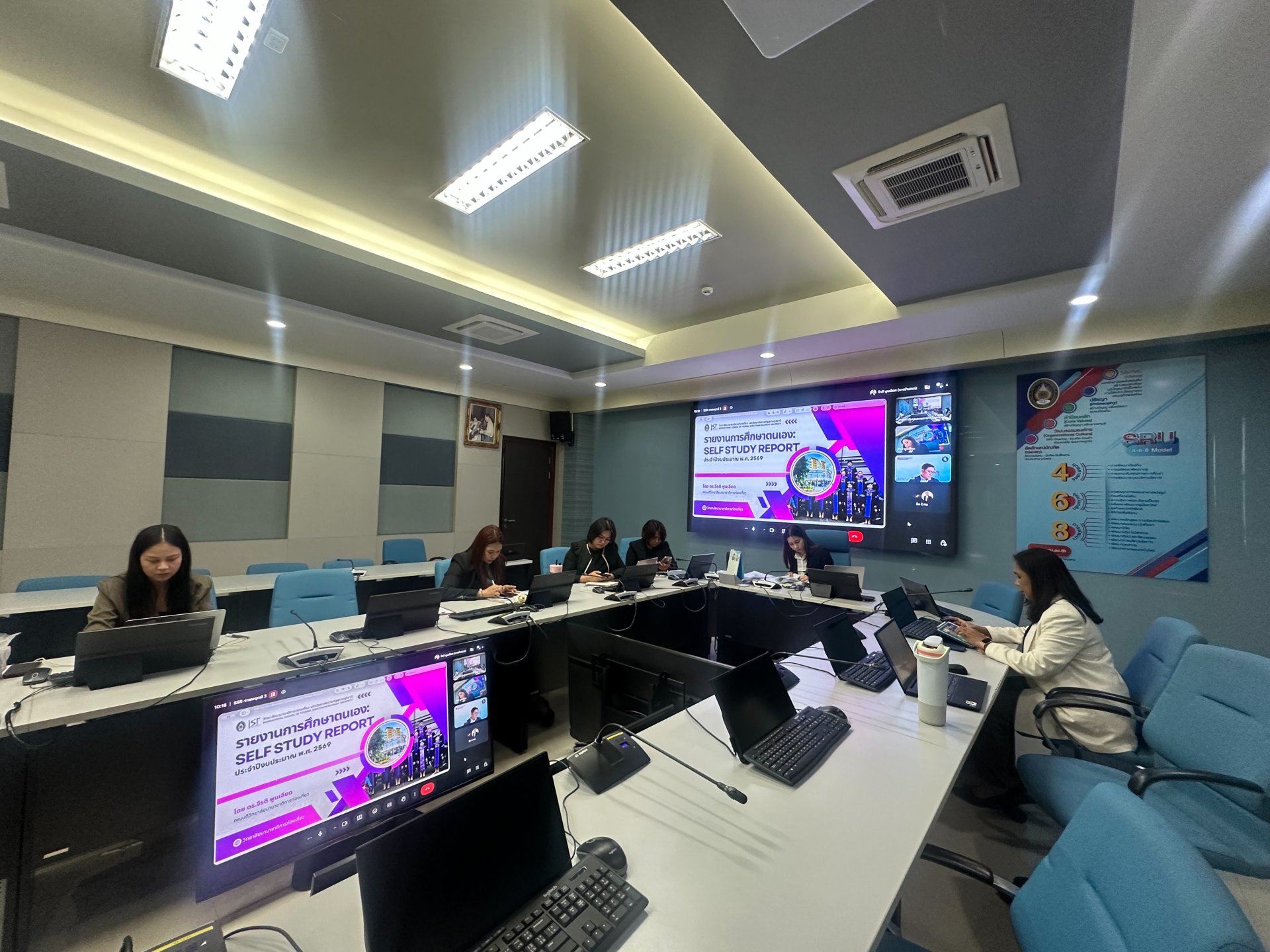
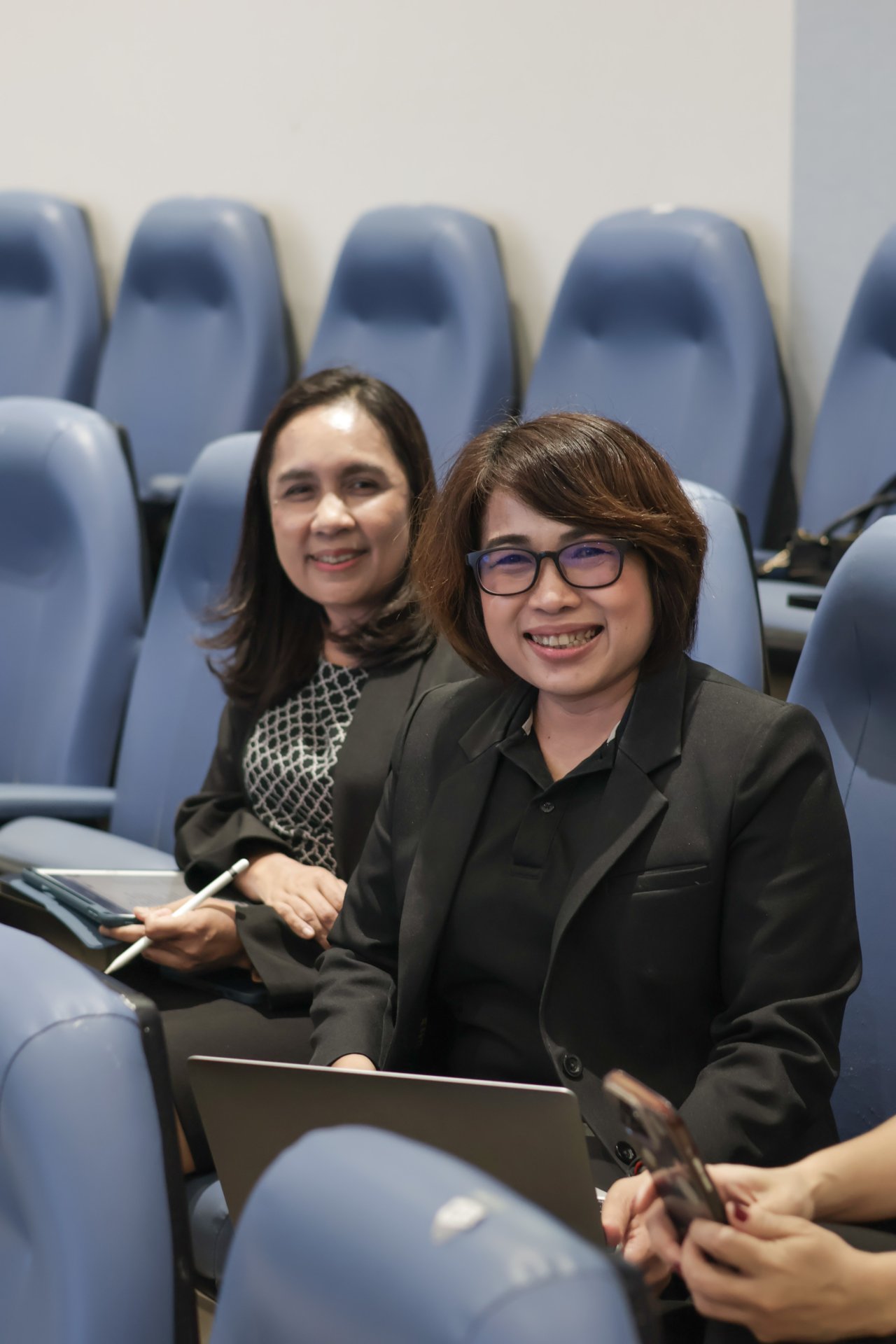
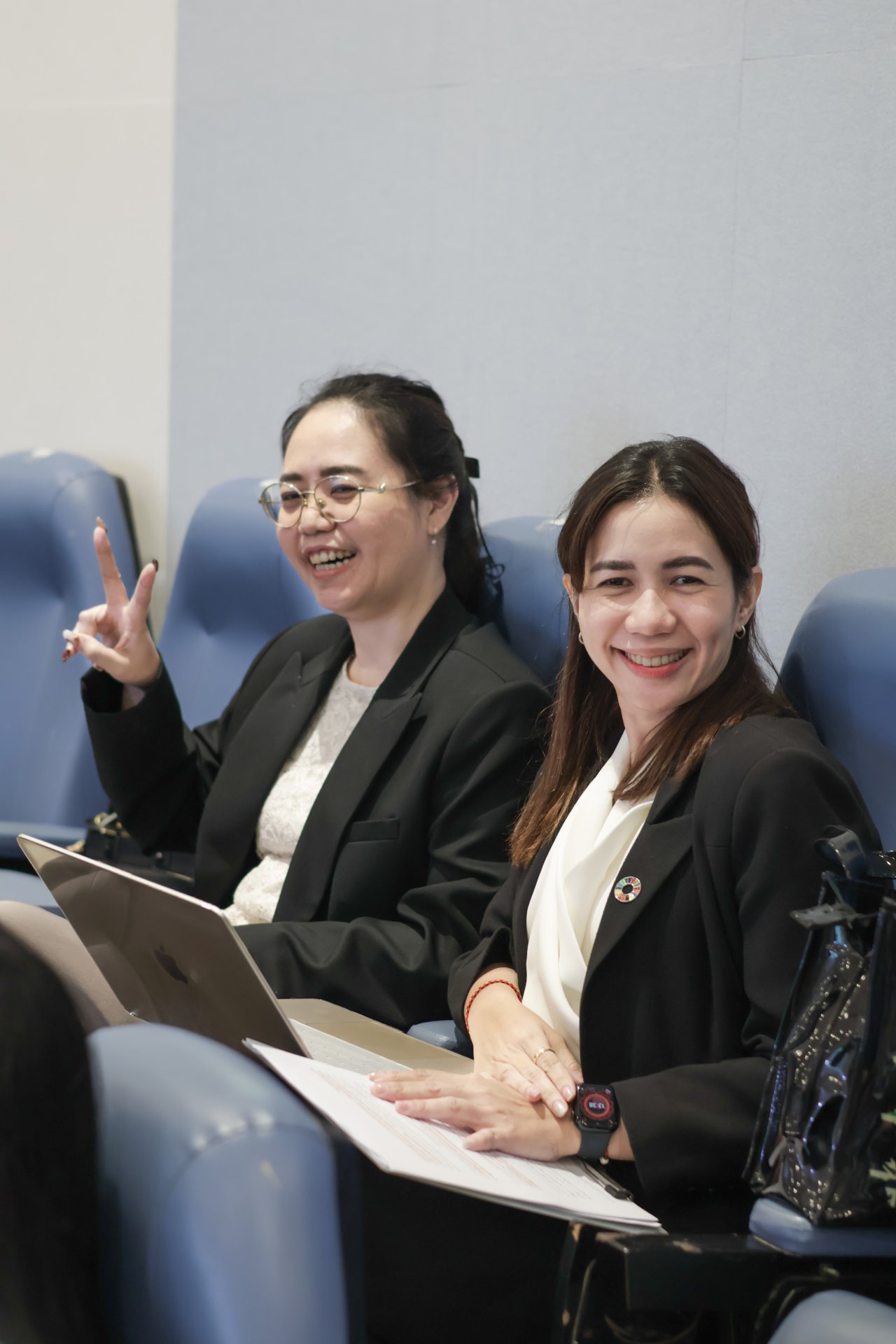
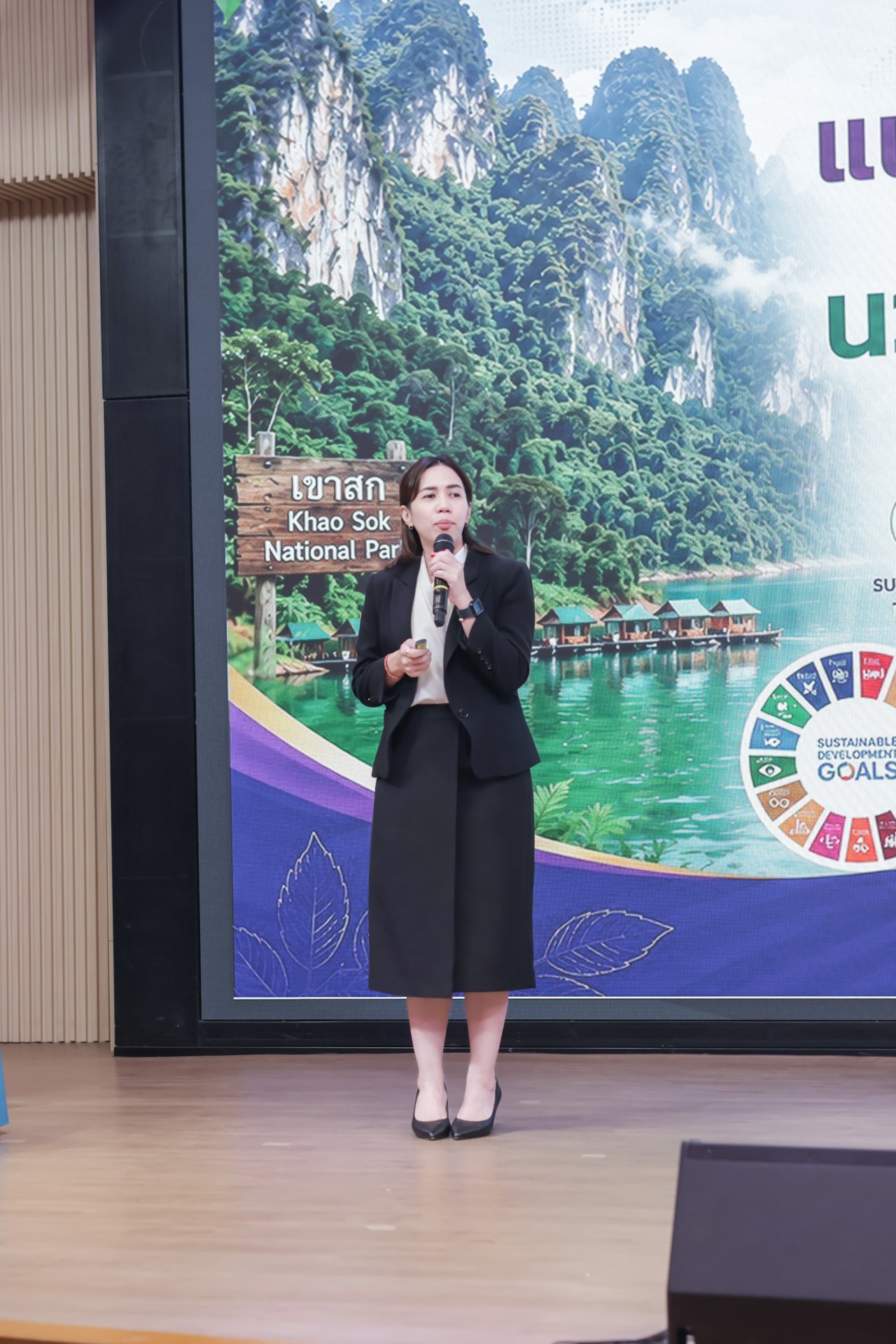
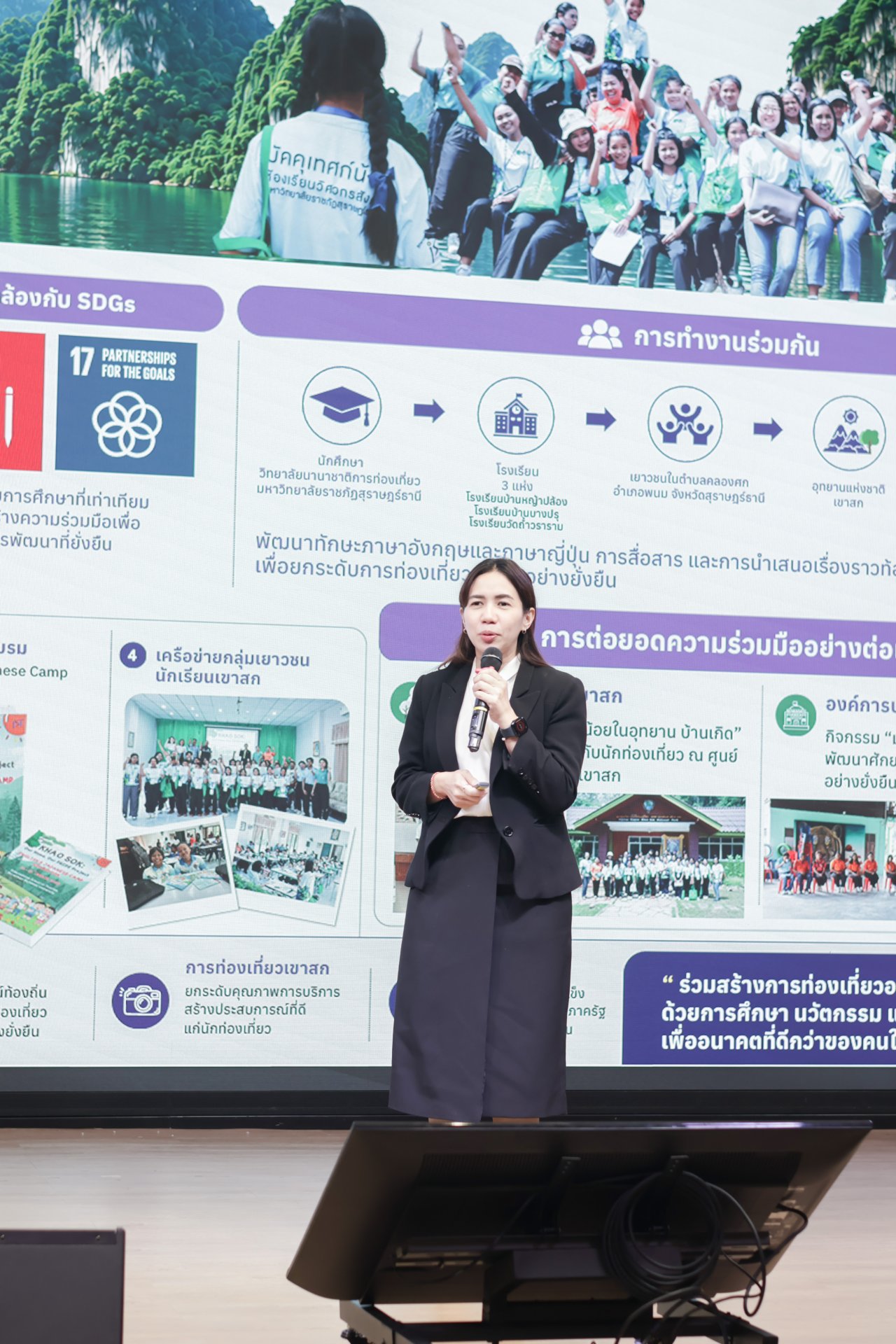
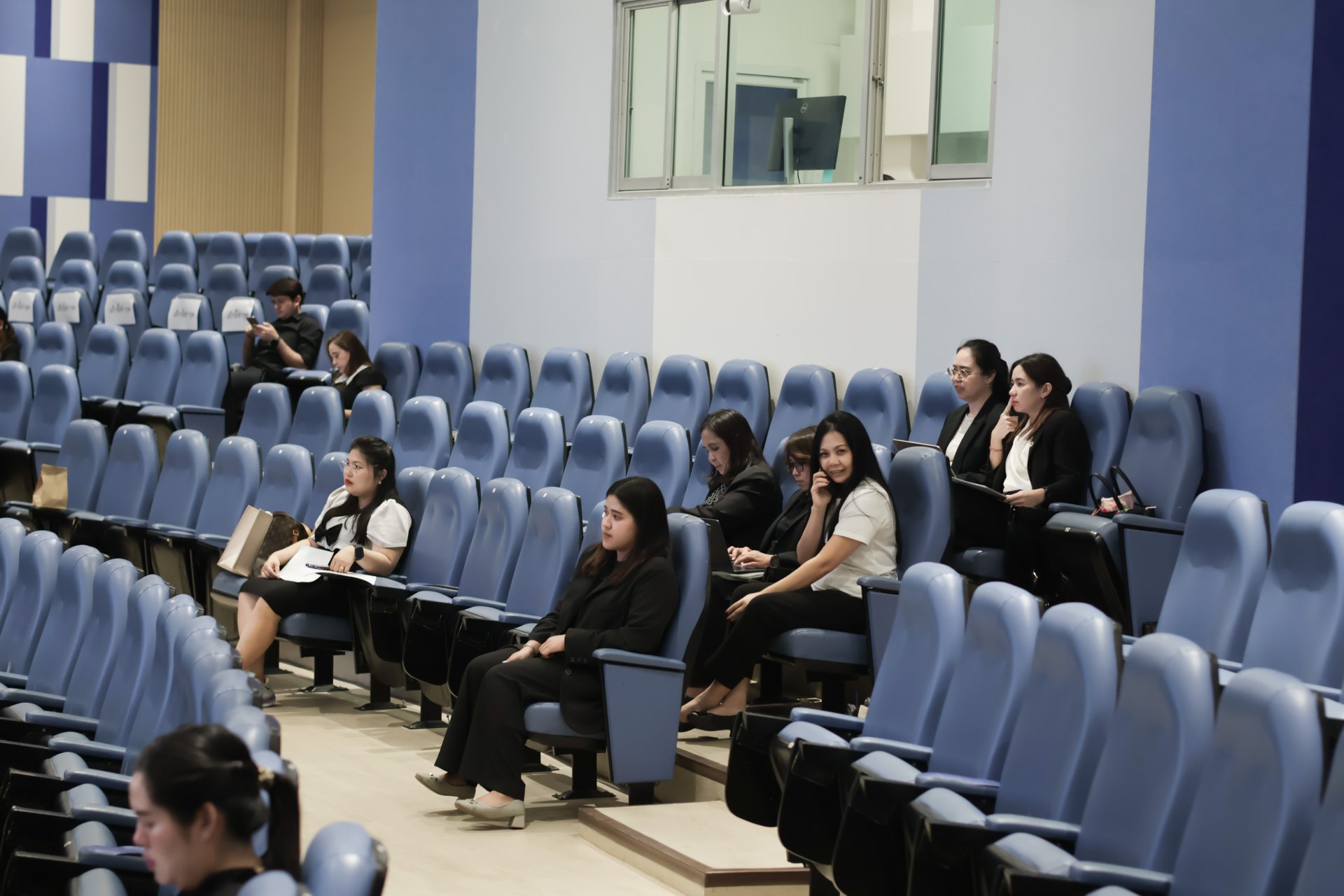
Dr. Jeerati Poonead, Dean of the International School of Tourism, Suratthani Rajabhat University, participated in the 2026 Best Practices & Innovation for Sustainability Contest on 15 July 2026. The presentations highlighted the School’s role in developing people, strengthening communities, connecting education with industry, and advancing responsible tourism.
The contest was organised to identify and showcase outstanding practices developed by units across Suratthani Rajabhat University. These practices demonstrate how knowledge from teaching and learning, research, academic services, and partnership building can be applied to address local challenges and respond to community needs in tangible ways.
For this contest, the International School of Tourism presented four key best-practice initiatives. They cover student preparation for international workplaces, community-based tourism event design, the transition of tourism businesses towards carbon neutrality, and the use of language skills to strengthen participation in tourism destinations.
Four Featured Best Practices from the International School of Tourism
Collaboration with Phulay Bay, a Ritz-Carlton Reserve, through the Butler Academy Program
A jointly developed curriculum between the University and a world-class hospitality organisation enables students to learn luxury service standards, gain authentic workplace experience, and strengthen both soft skills and professional competencies for careers in the international hospitality industry.
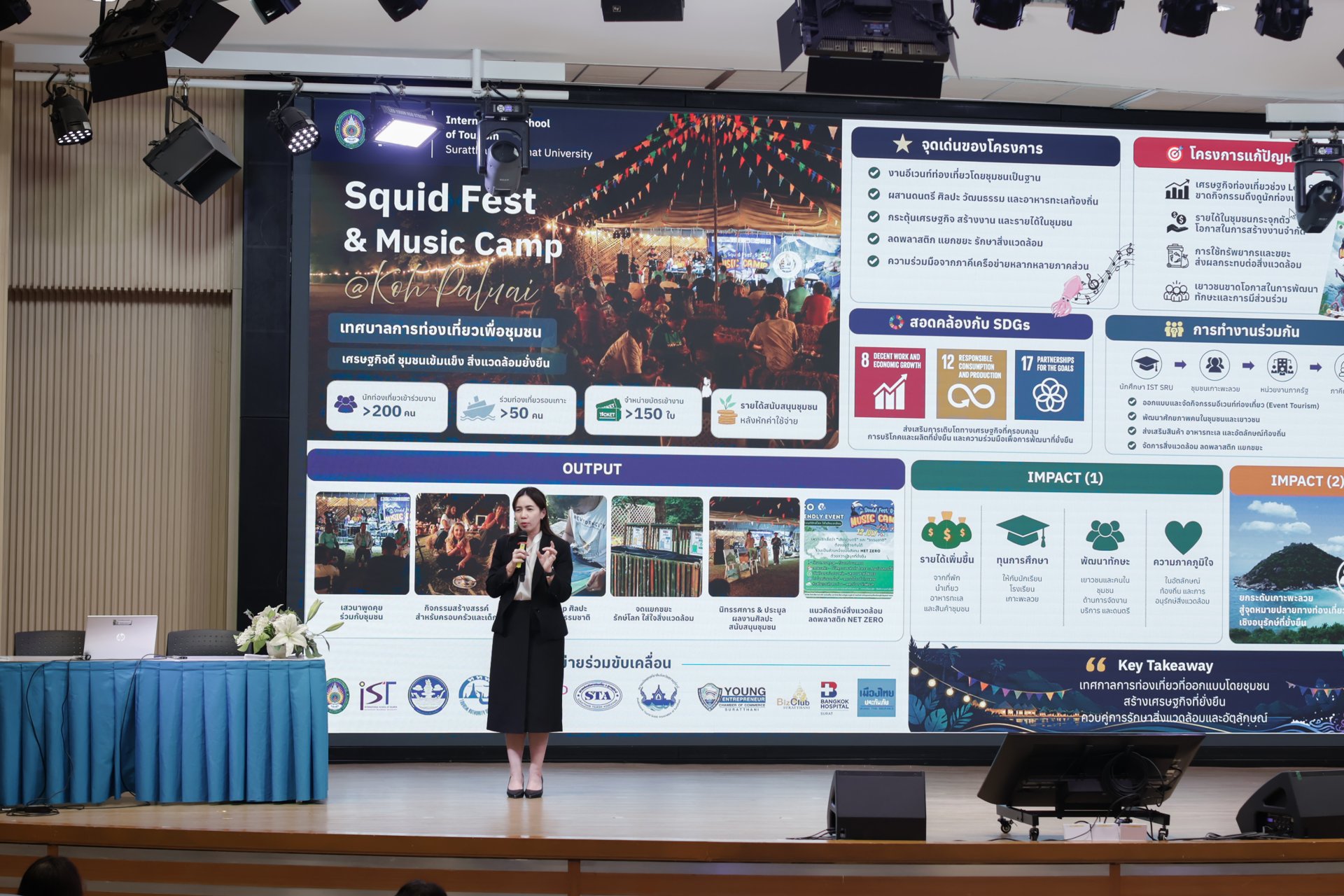
Squid Fest & Music Camp @ Koh Phaluai: A Community-Based Tourism Festival
The festival was designed around Koh Phaluai’s local identity, combining music, arts, culture, and local seafood to stimulate the economy during the low season. It generates community income while promoting plastic reduction, waste separation, and environmentally responsible event management.
A Pathway towards Carbon Neutrality for Accommodation Businesses in Khao Sok
Research is translated into practical development for accommodation businesses through a Carbon Neutral Hospitality model, greenhouse-gas reduction guidelines, and collaboration among the University, communities, businesses, and government agencies. The initiative supports Khao Sok’s systematic transition towards a low-carbon tourism destination.
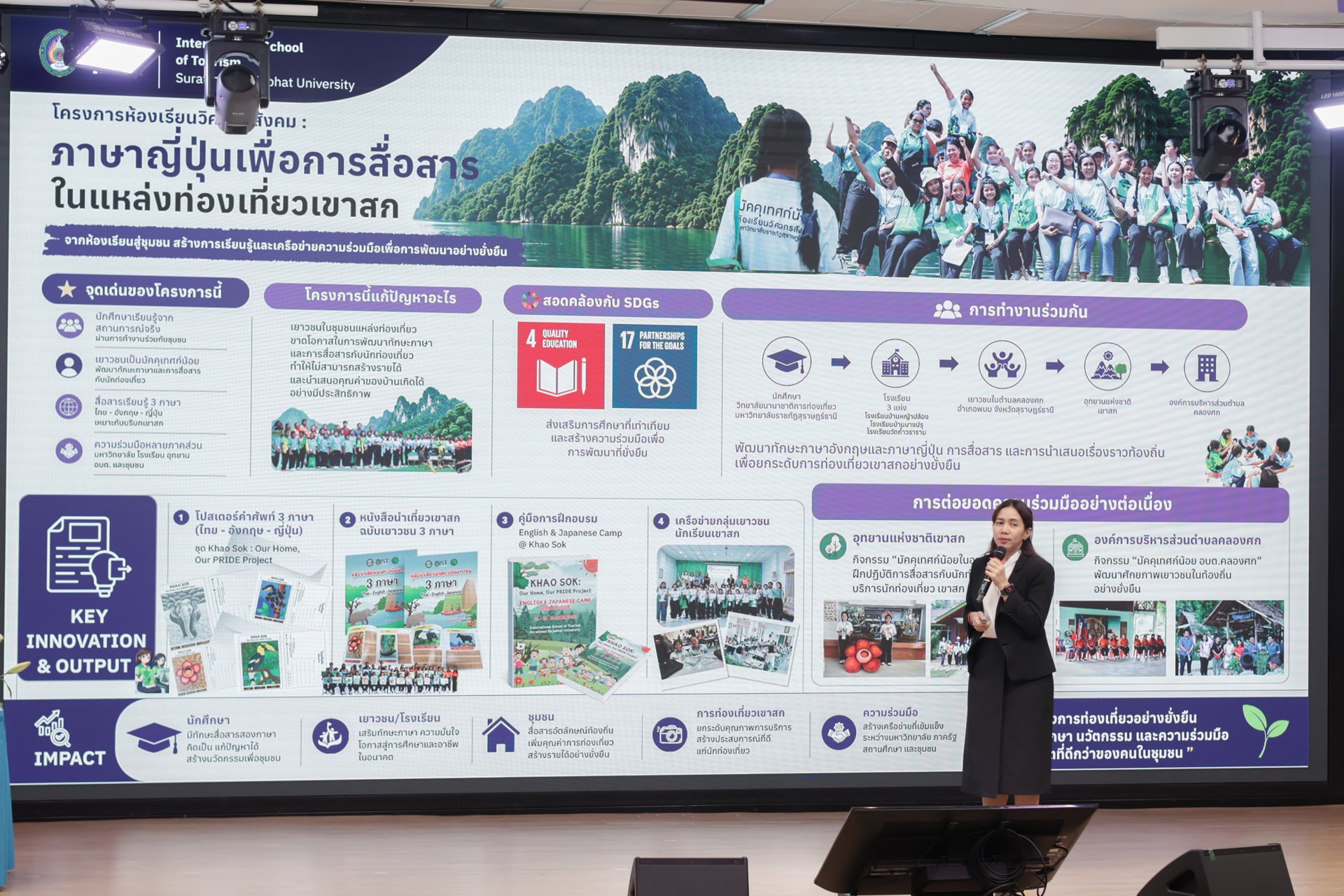
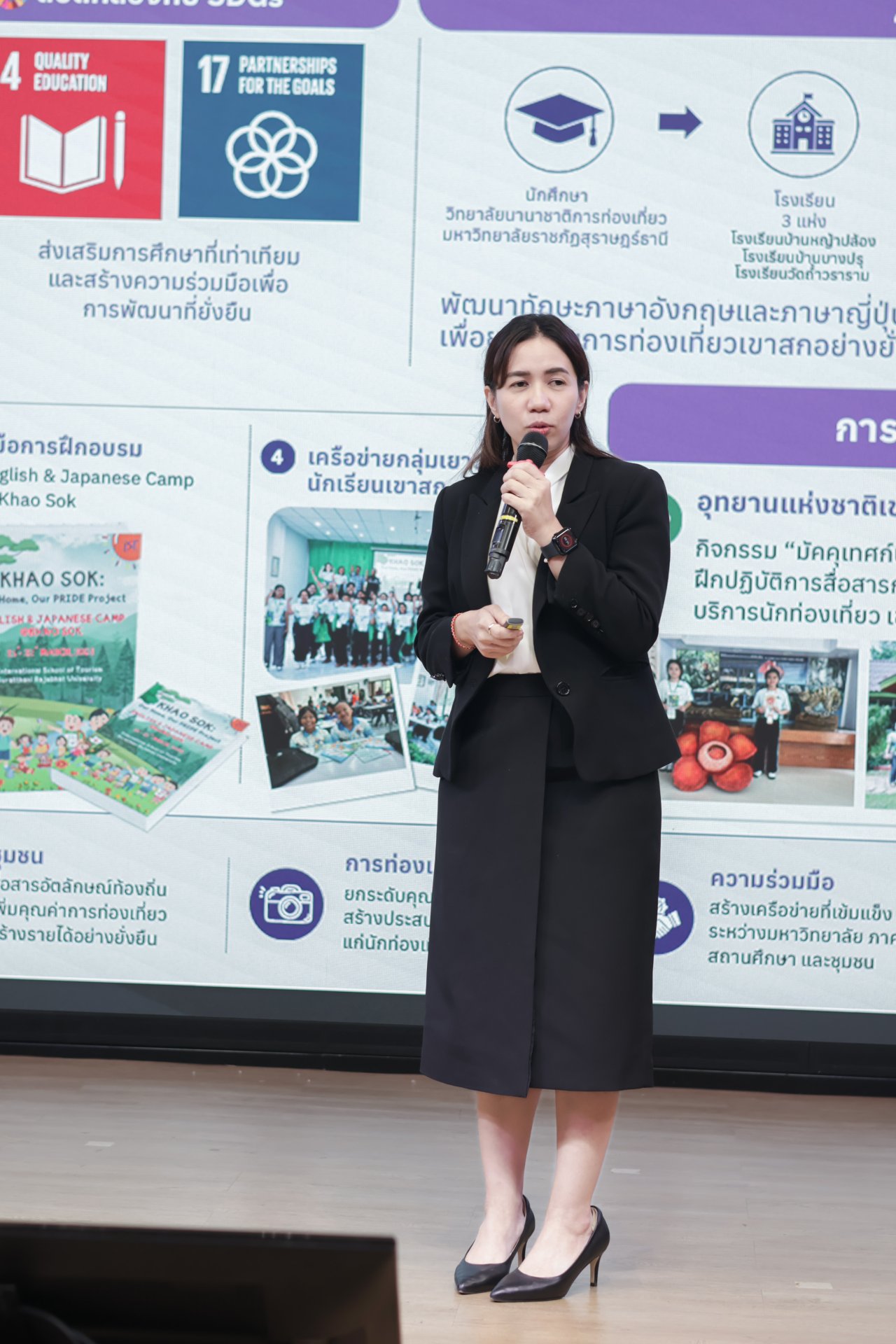
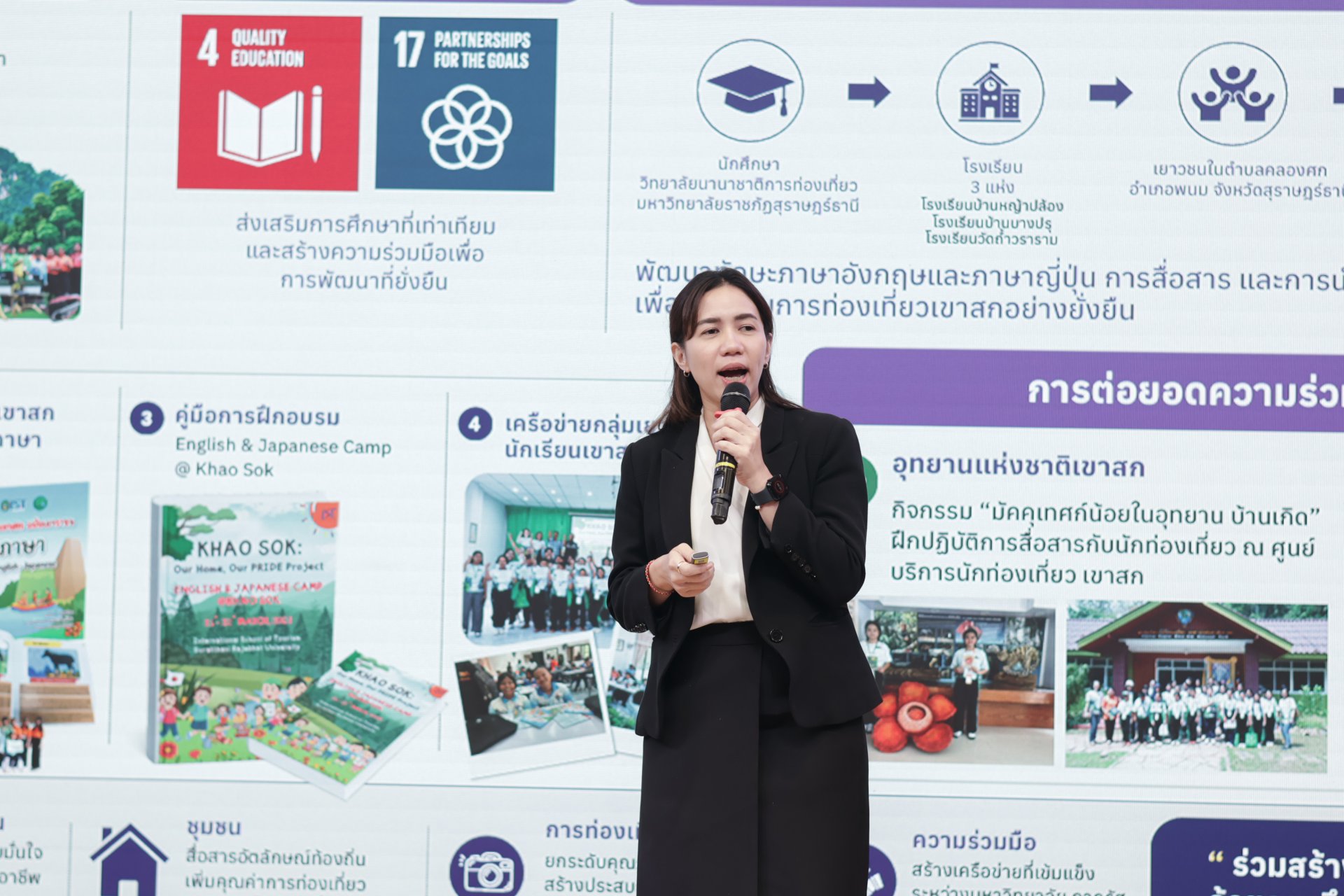
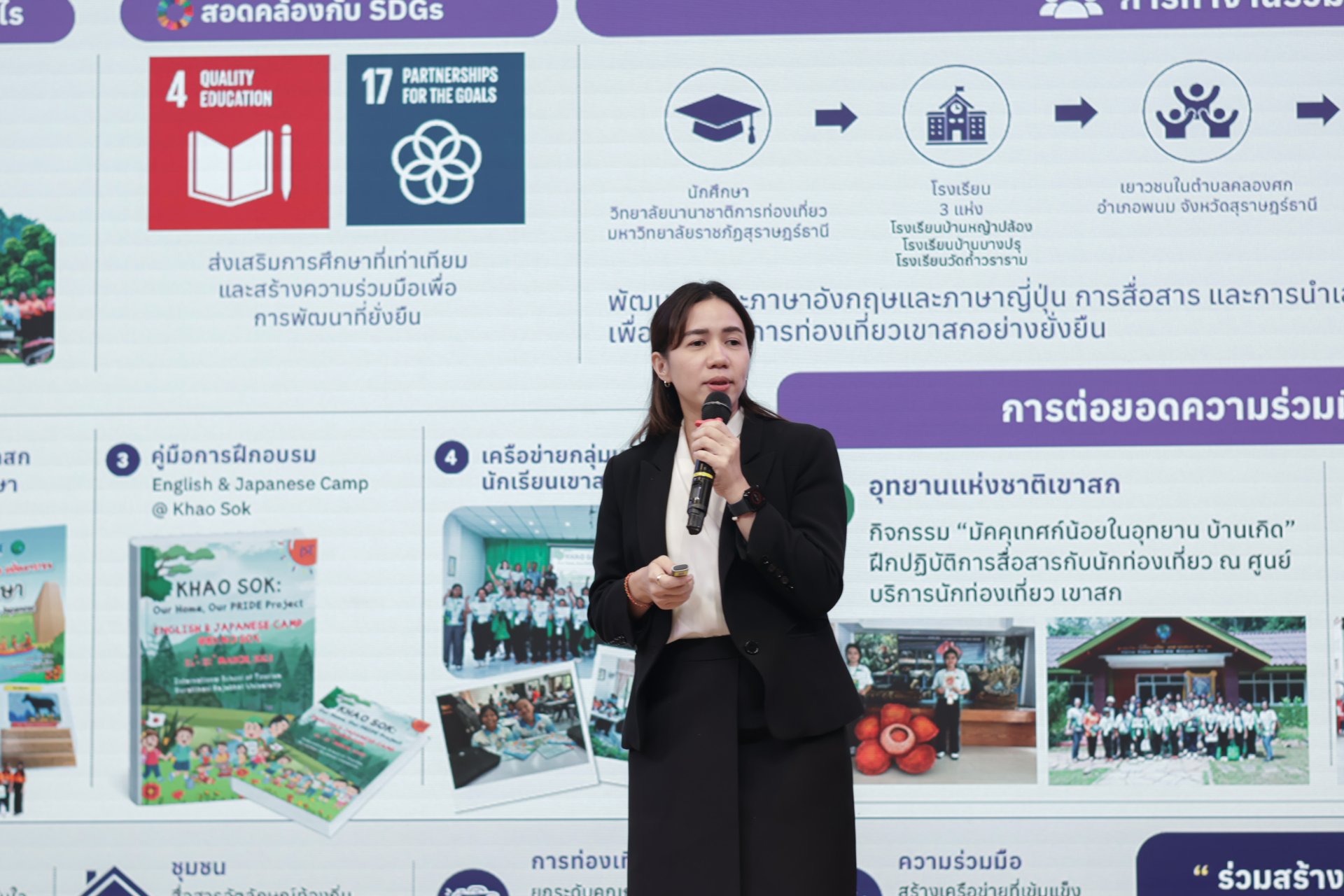
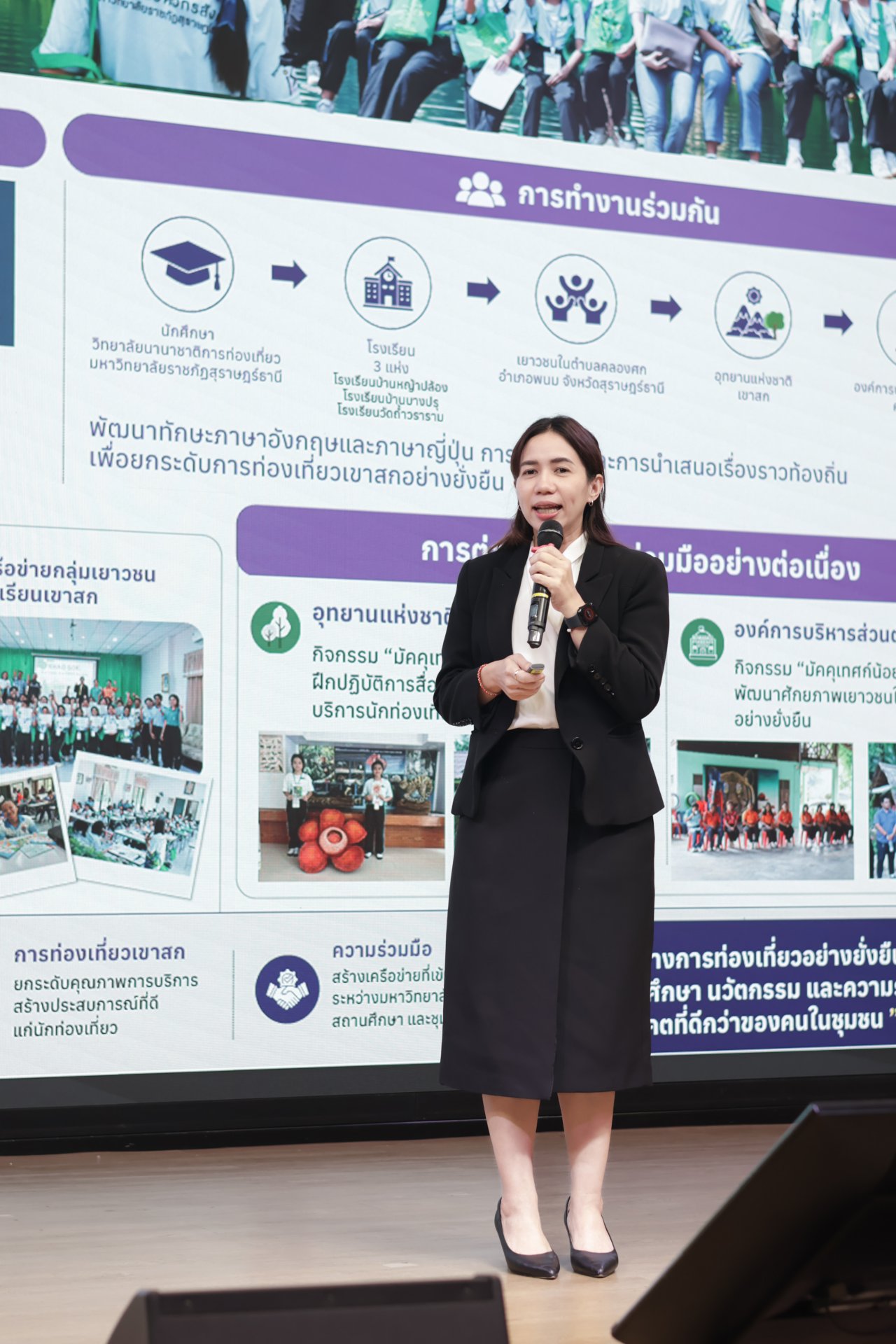
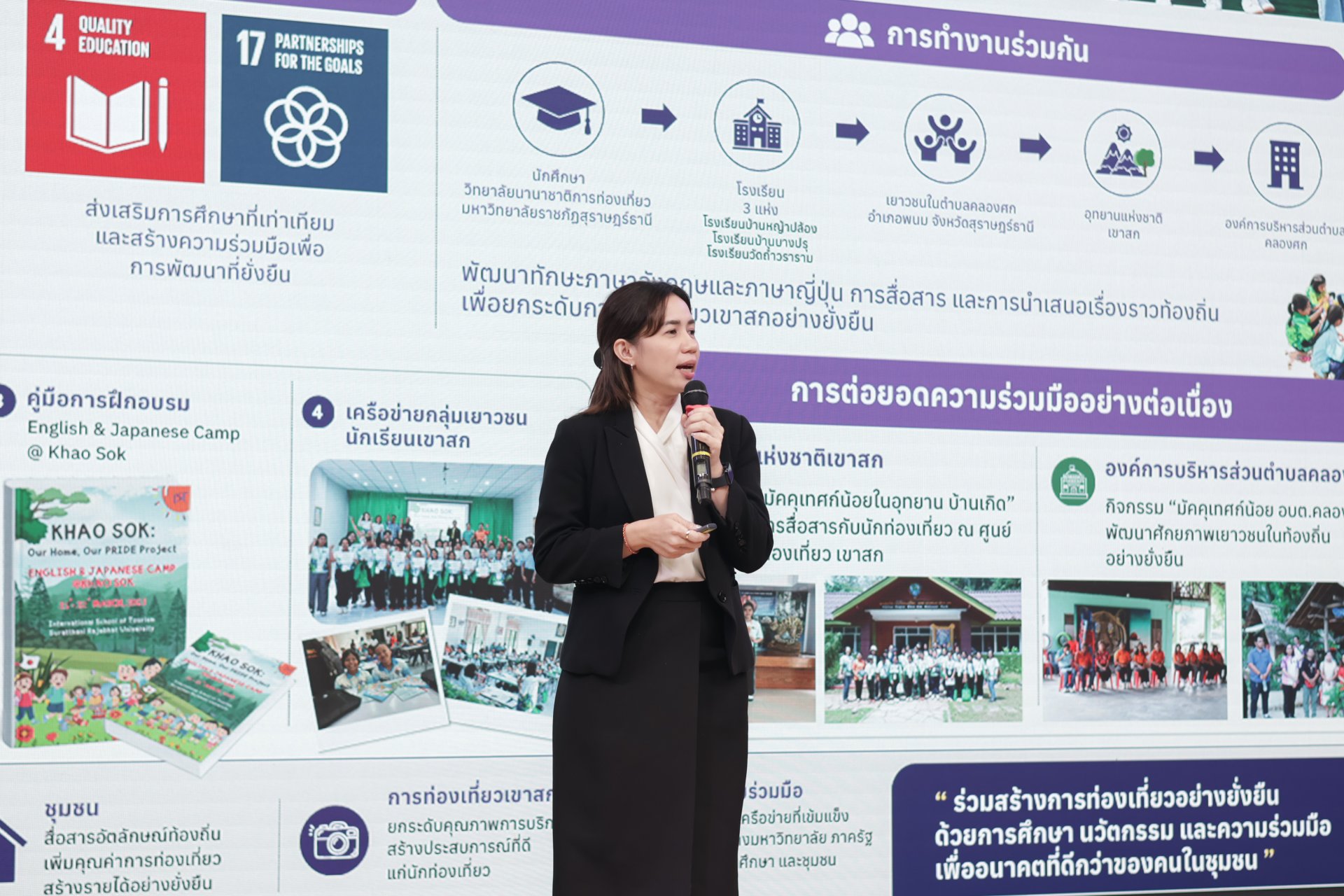
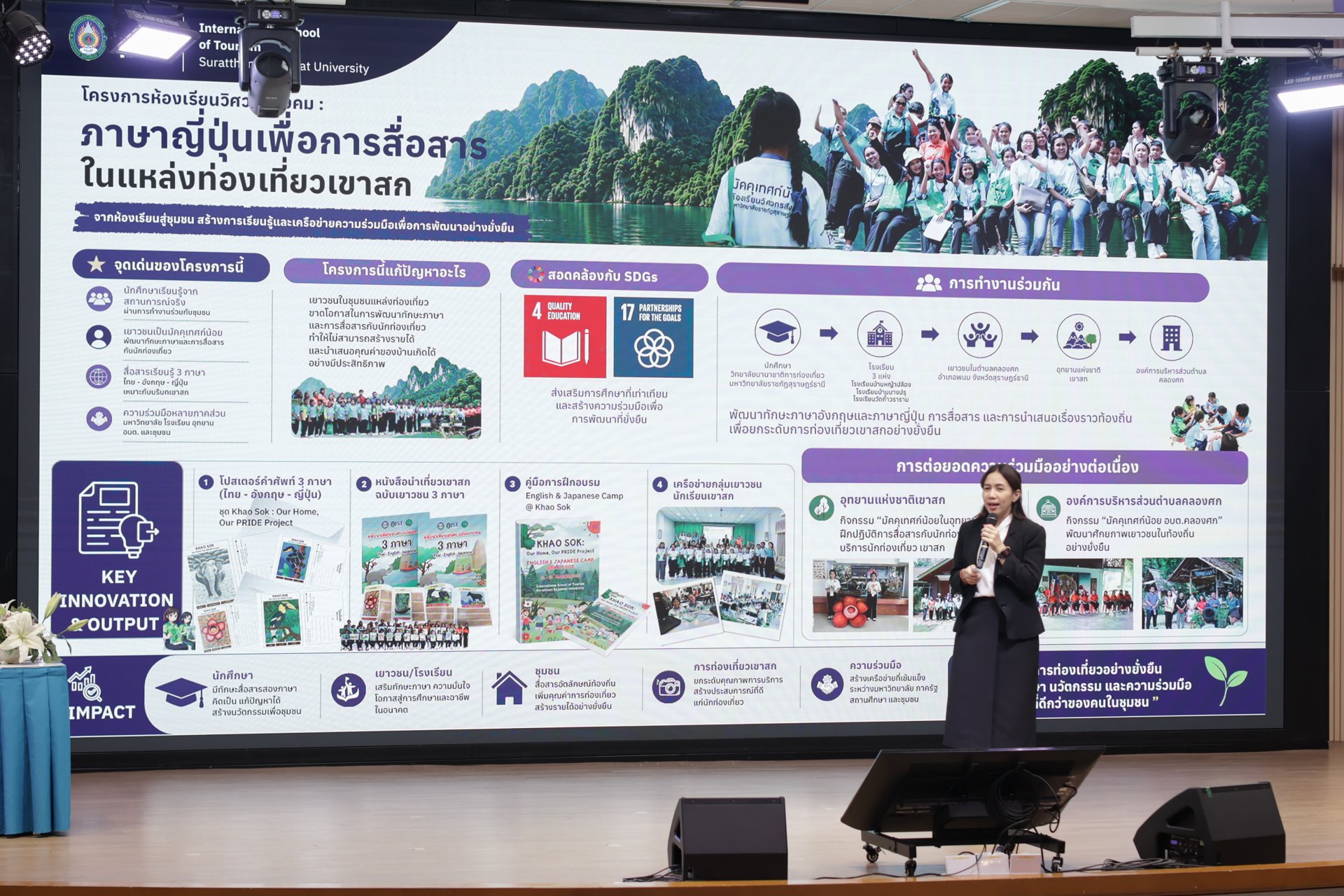
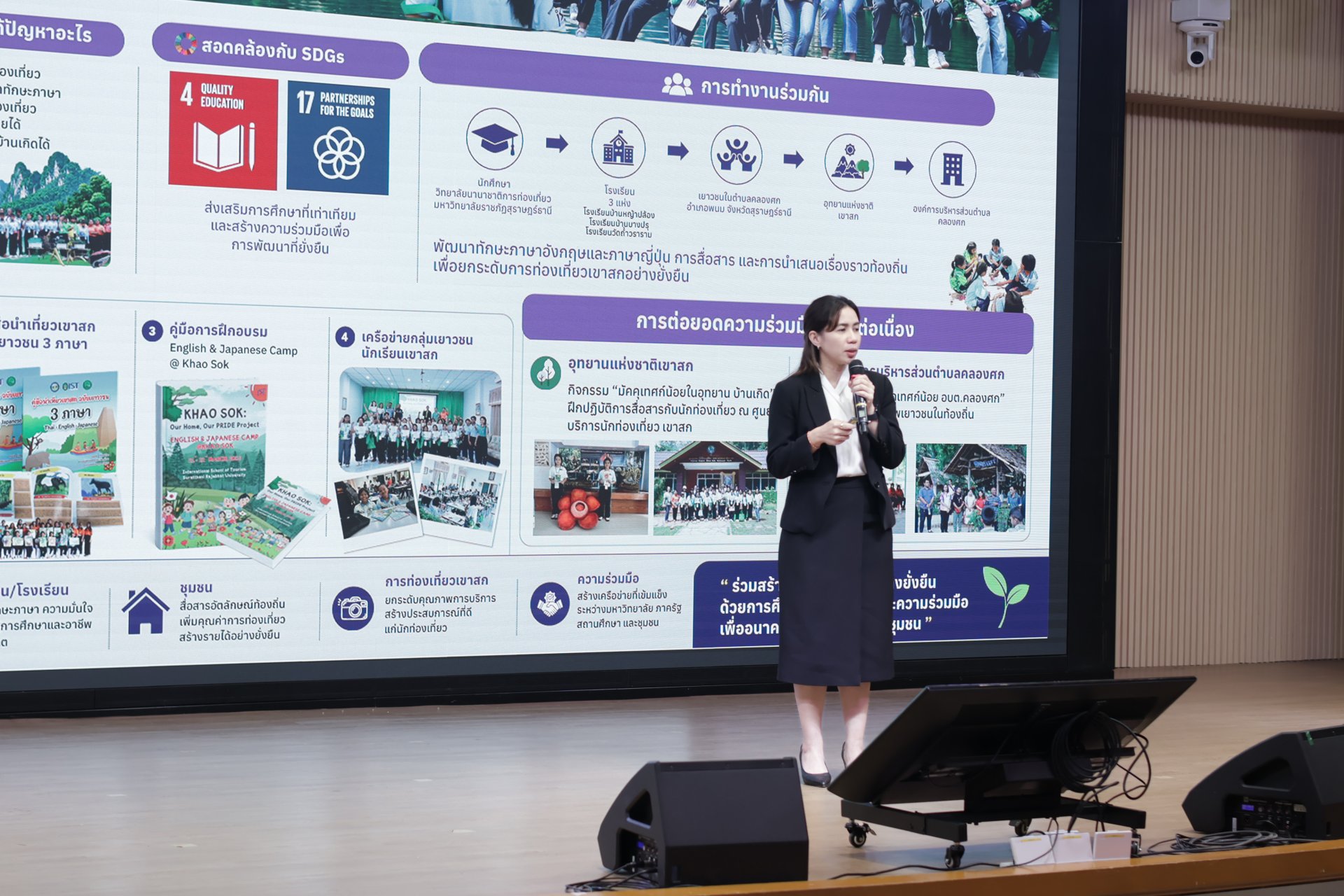
Social Engineer Classroom: Japanese for Communication in Khao Sok Tourism Destinations
Community-engaged learning enables students to develop trilingual learning materials and communication tools in Thai, English, and Japanese. Skills are then transferred to local young people and stakeholders to help communicate local identity and improve tourism services for international visitors.
Infographics: Best Practices and Innovation for Sustainability
Explore the key concepts, implementation processes, outcomes, and links to the Sustainable Development Goals across the School’s four featured initiatives.
Collaboration with Phulay Bay, a Ritz-Carlton Reserve
Developing students through a jointly designed curriculum and authentic workplace experience under the Butler Academy Program.
Squid Fest & Music Camp @ Koh Phaluai
A community-based tourism festival connecting the local economy, cultural identity, and environmental responsibility.
A Pathway towards Carbon Neutrality for Accommodation Businesses in Khao Sok
Applying research and industry collaboration to advance low-carbon tourism development.
Social Engineer Classroom: Japanese for Communication in Khao Sok Tourism Destinations
Developing language, communication, and learning resources with young people, schools, and communities in Khao Sok.
Together, the four initiatives reflect the International School of Tourism’s commitment to experiential learning, student development in partnership with industry, community-based learning, and collaborative networks involving the University, businesses, government agencies, educational institutions, and local residents.
The initiatives also demonstrate how academic knowledge can address real challenges in tourism and hospitality, including shortages of work-ready personnel, limited community income during the low season, environmental impacts, and the need to develop young people’s language, communication, and collaboration skills.
Participation in the contest provides an important platform for the School to share its best practices, exchange knowledge, and extend the initiatives into future curriculum development, learning activities, and collaborative networks that can respond to changes in tourism and hospitality.
Contest Results Announcement
The contest results will be announced during SRU Open House 2027, taking place from 22–24 July 2026 at Suratthani Rajabhat University.
Alignment with the Sustainable Development Goals
The initiatives of the International School of Tourism align with the United Nations Sustainable Development Goals in the following areas.
| SDG Goal | Goal | Connection to the School’s Initiatives |
|---|---|---|
|
SDG 4: Quality Education | Promotes experiential learning, professional and language-skill development, and learning designed with businesses and communities to prepare students and young people for lifelong learning and future work. |
|
SDG 8: Decent Work and Economic Growth | Develops student competencies that match the needs of the tourism and hospitality industries while supporting tourism activities that create income, employment, and economic opportunities for local communities. |
|
SDG 12: Responsible Consumption and Production | Encourages tourism activities that reduce plastic use, separate waste, and use resources responsibly, while developing accommodation-management practices that minimise environmental impacts. |
|
SDG 13: Climate Action | Uses research and business collaboration to develop greenhouse-gas reduction practices, create models for low-carbon accommodation, and advance Khao Sok as a carbon-neutral tourism destination. |
|
SDG 17: Partnerships for the Goals | Builds partnerships among the University, hotels and tourism businesses, communities, educational institutions, government agencies, national parks, and other stakeholders to co-design learning, develop people, and advance sustainable tourism. |