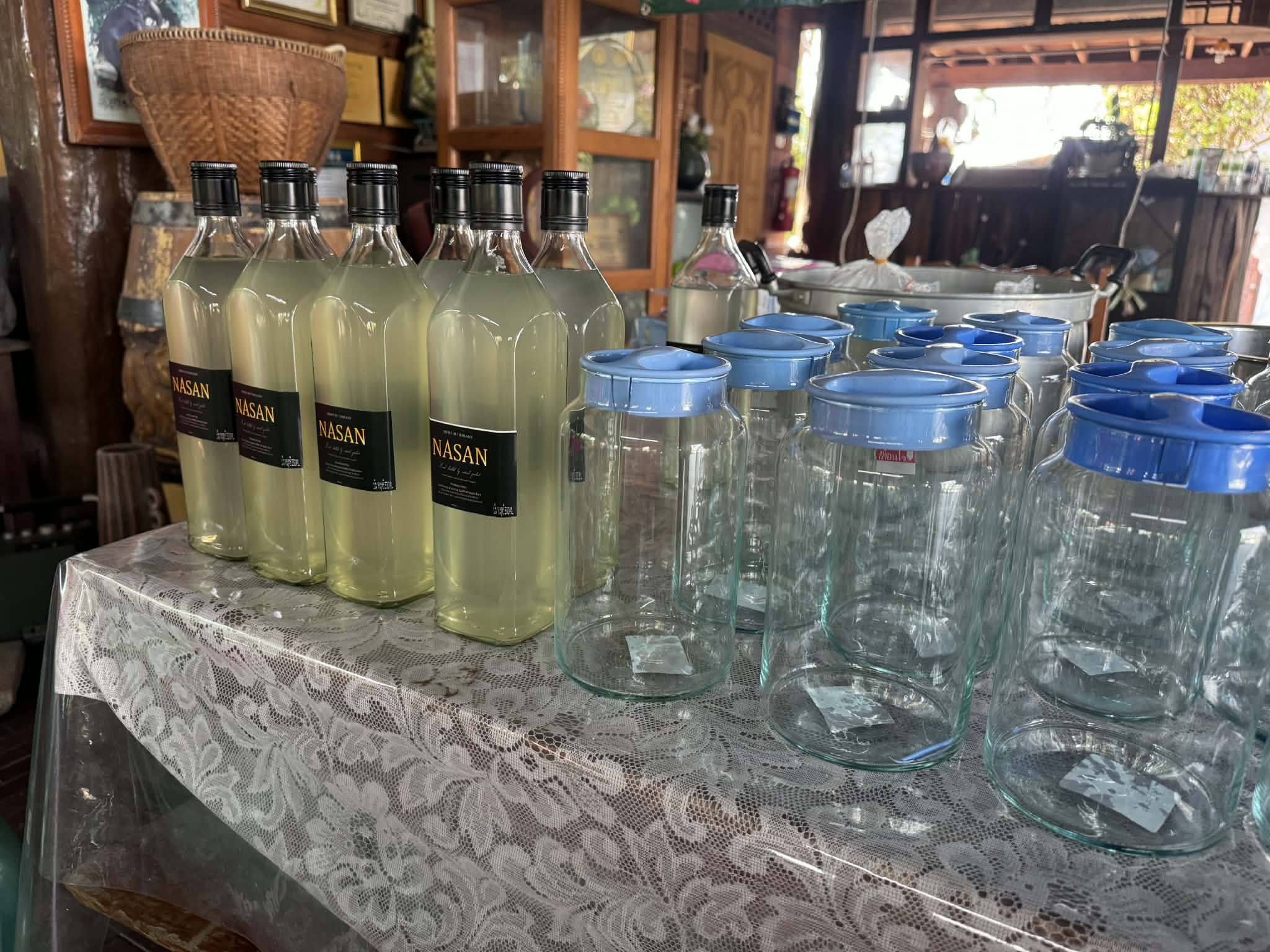
The International School of Tourism, Suratthani Rajabhat University, continues its academic service mission by transforming “GI Na San Rambutan” into value-added beverage products, strengthening local economic resilience while contributing to the United Nations Sustainable Development Goals (SDGs).
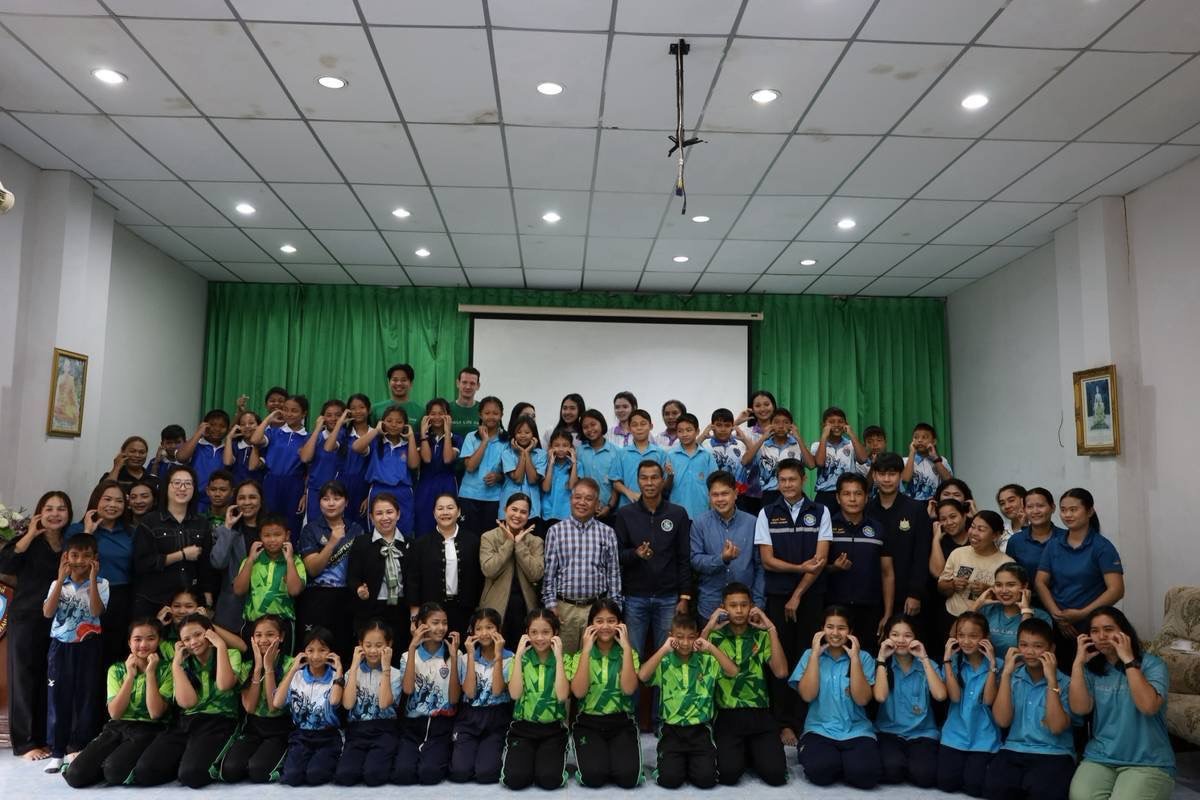
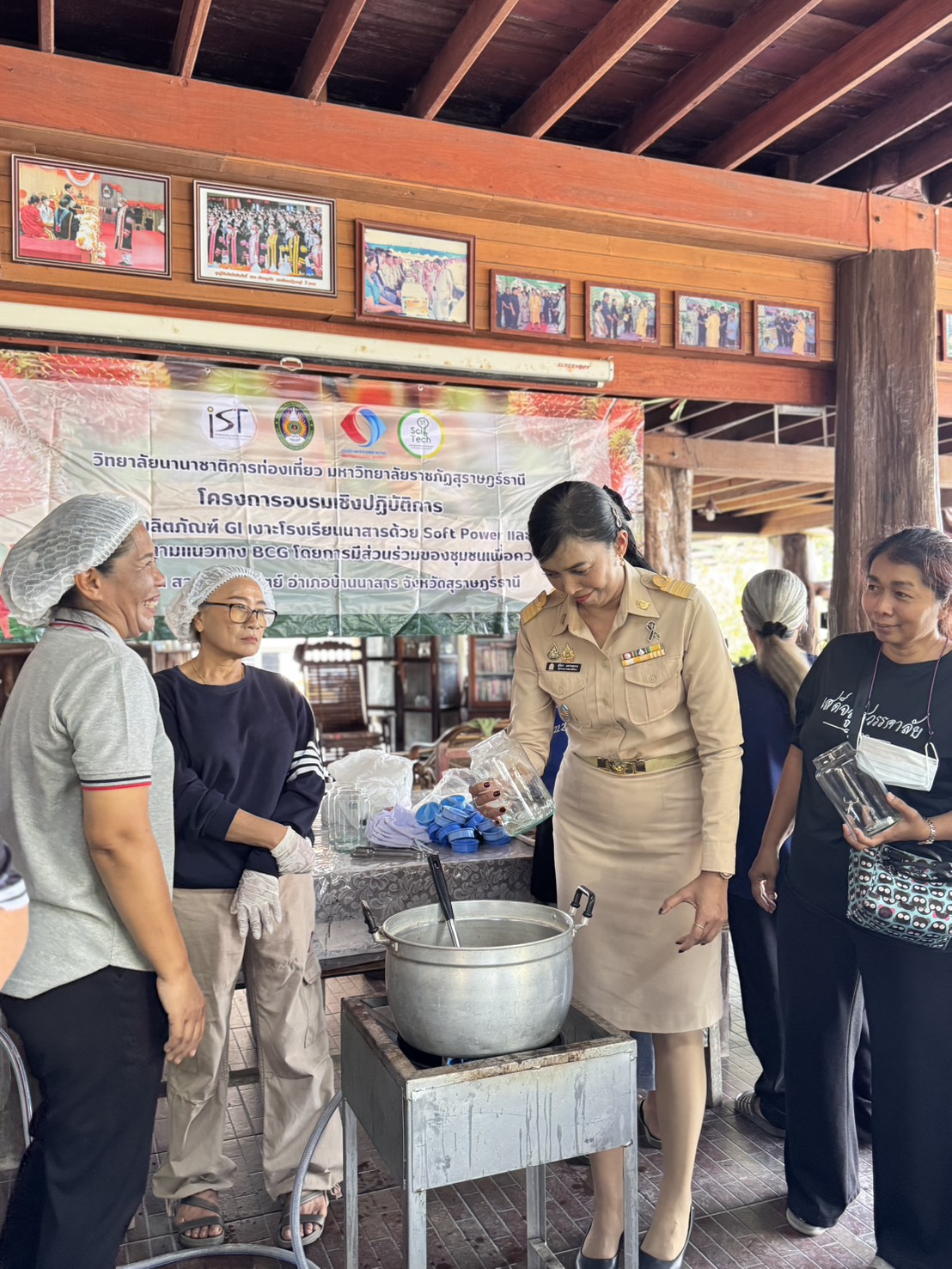
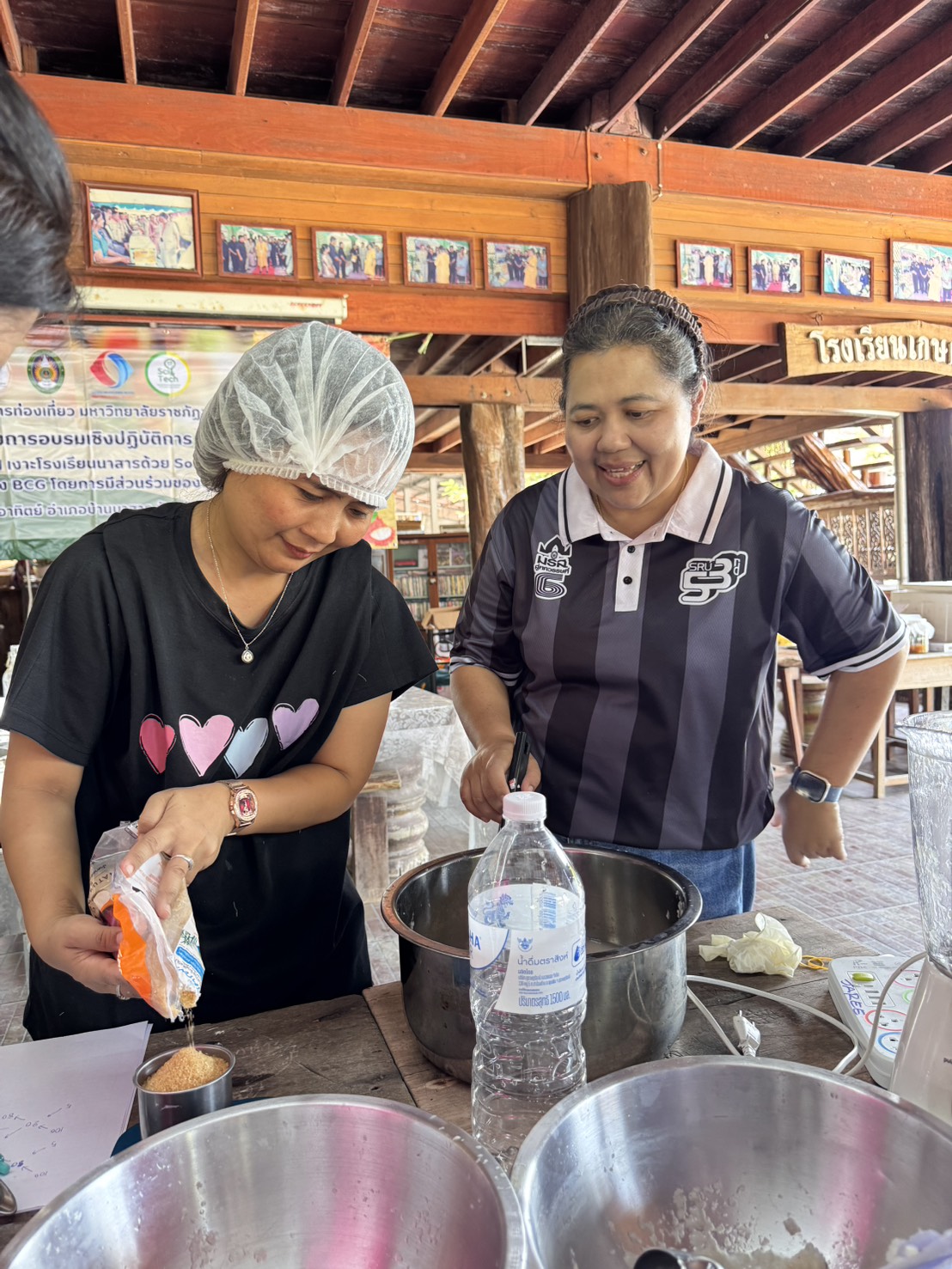
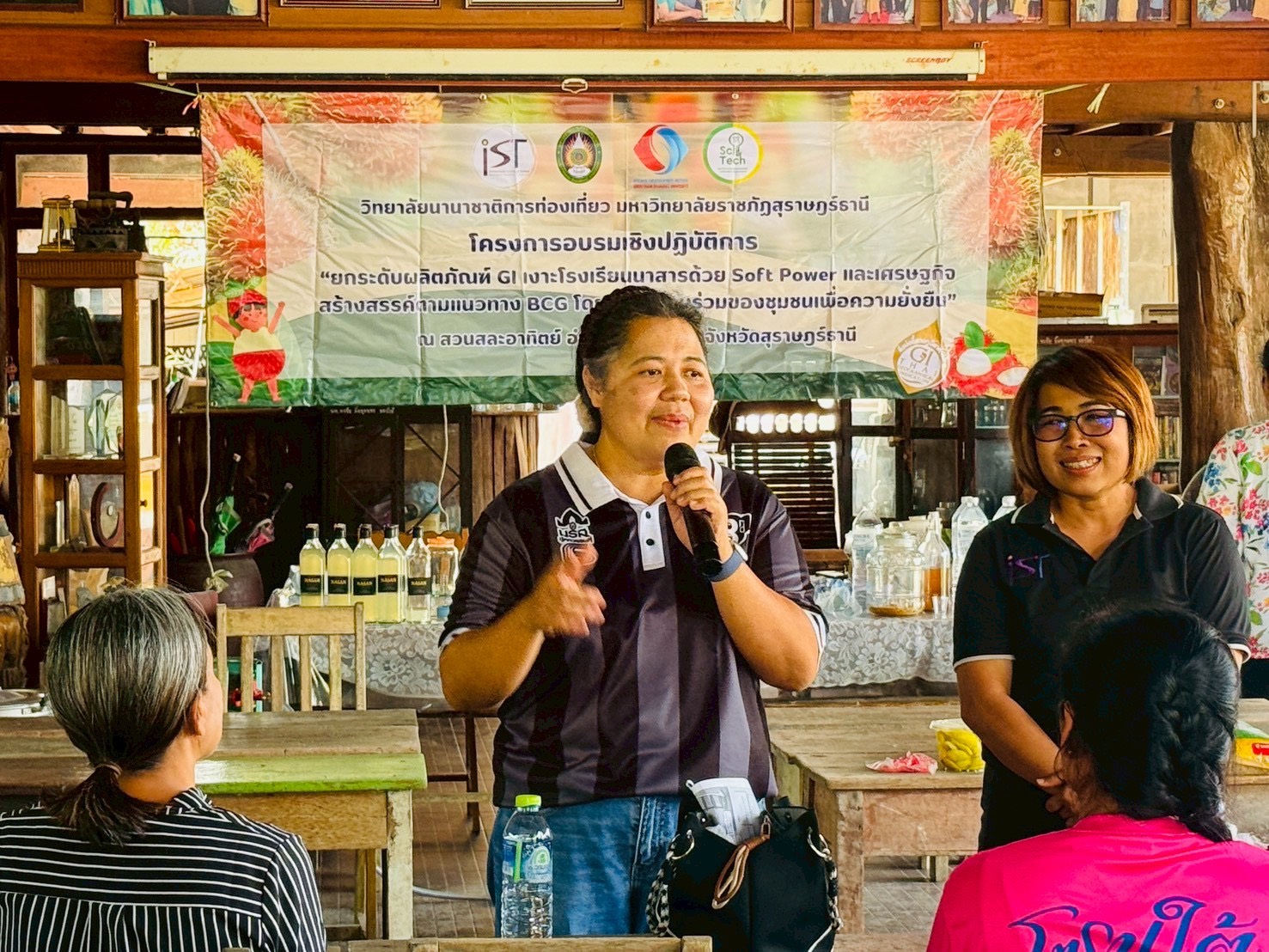
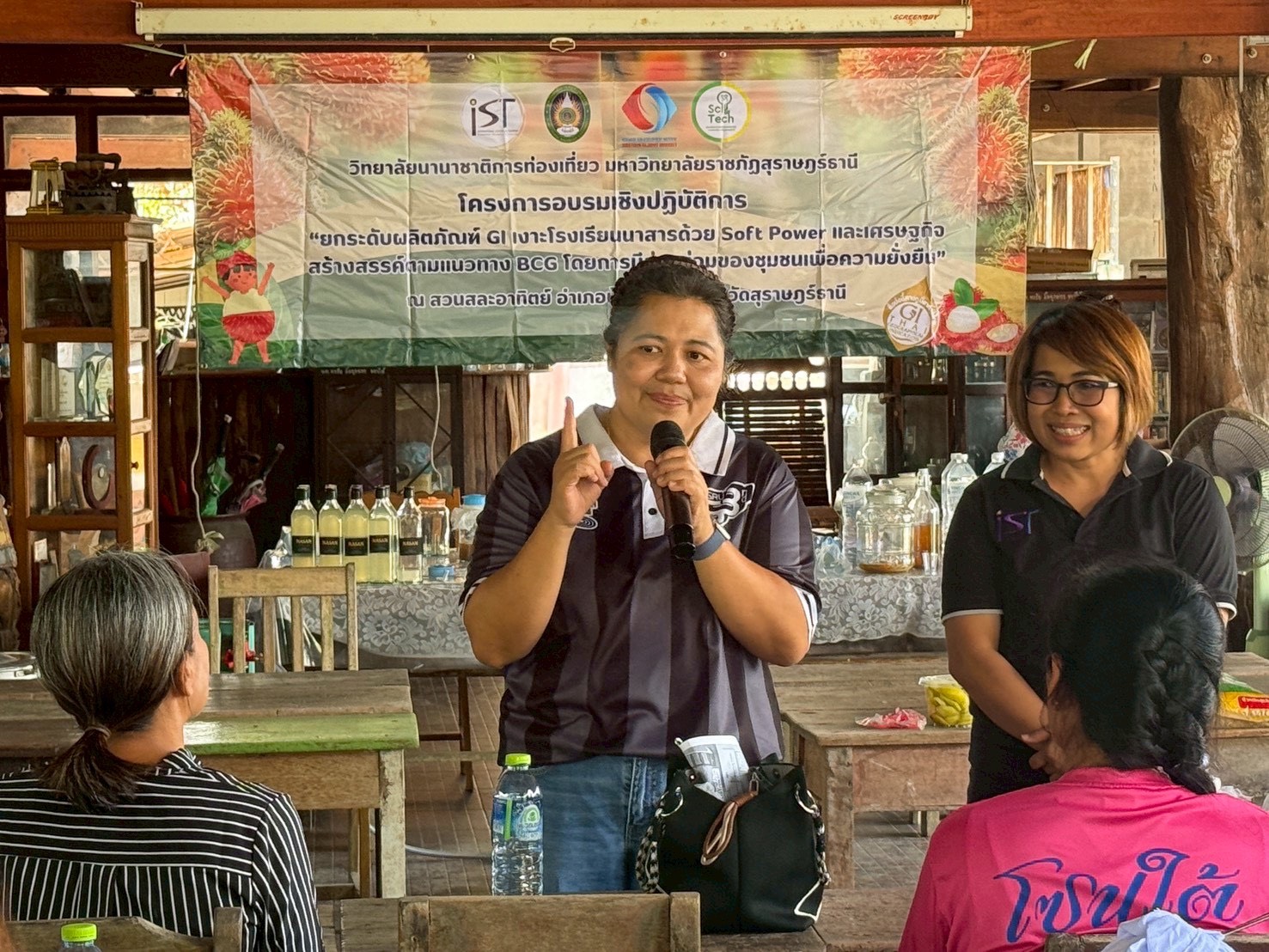
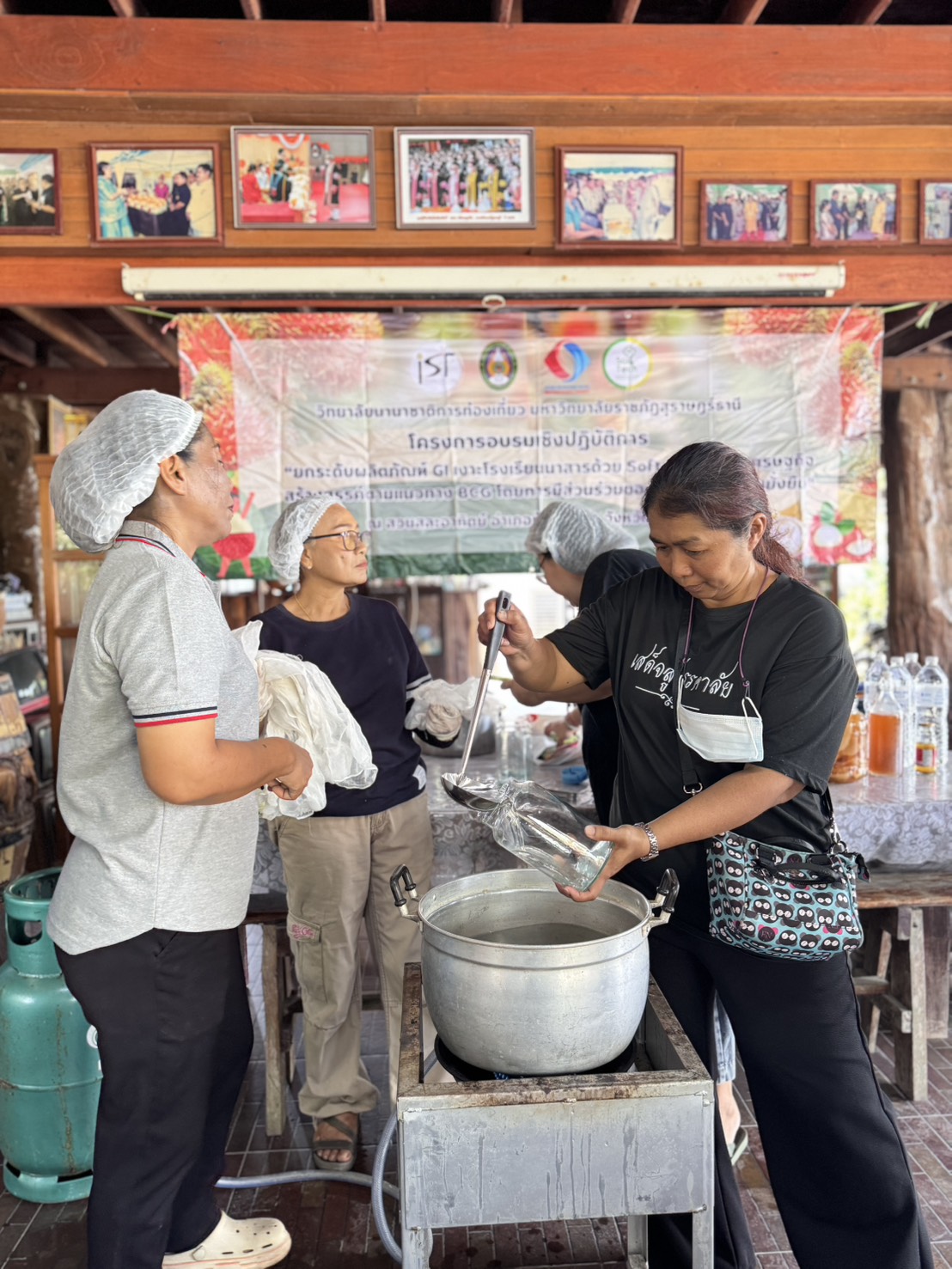
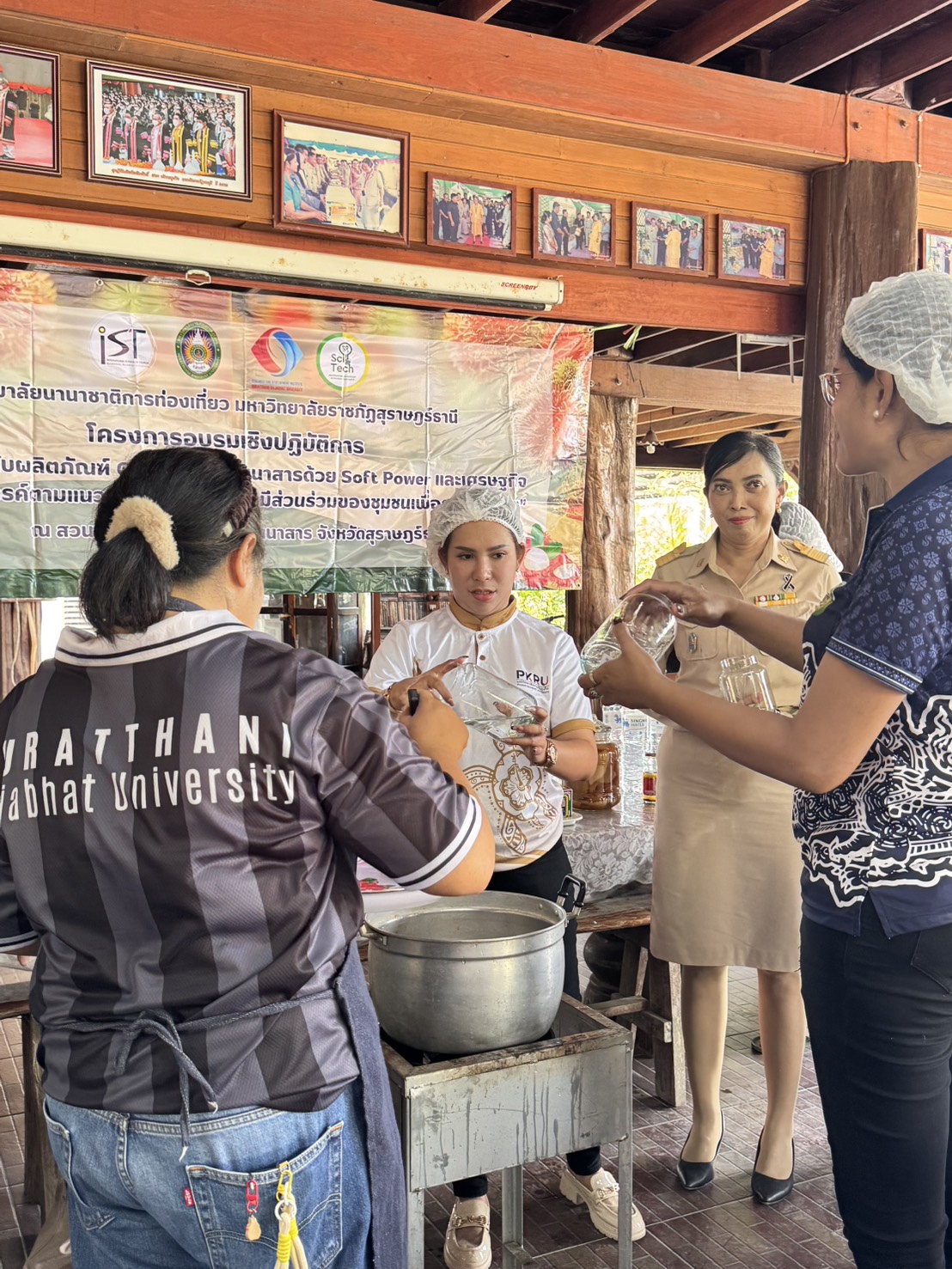
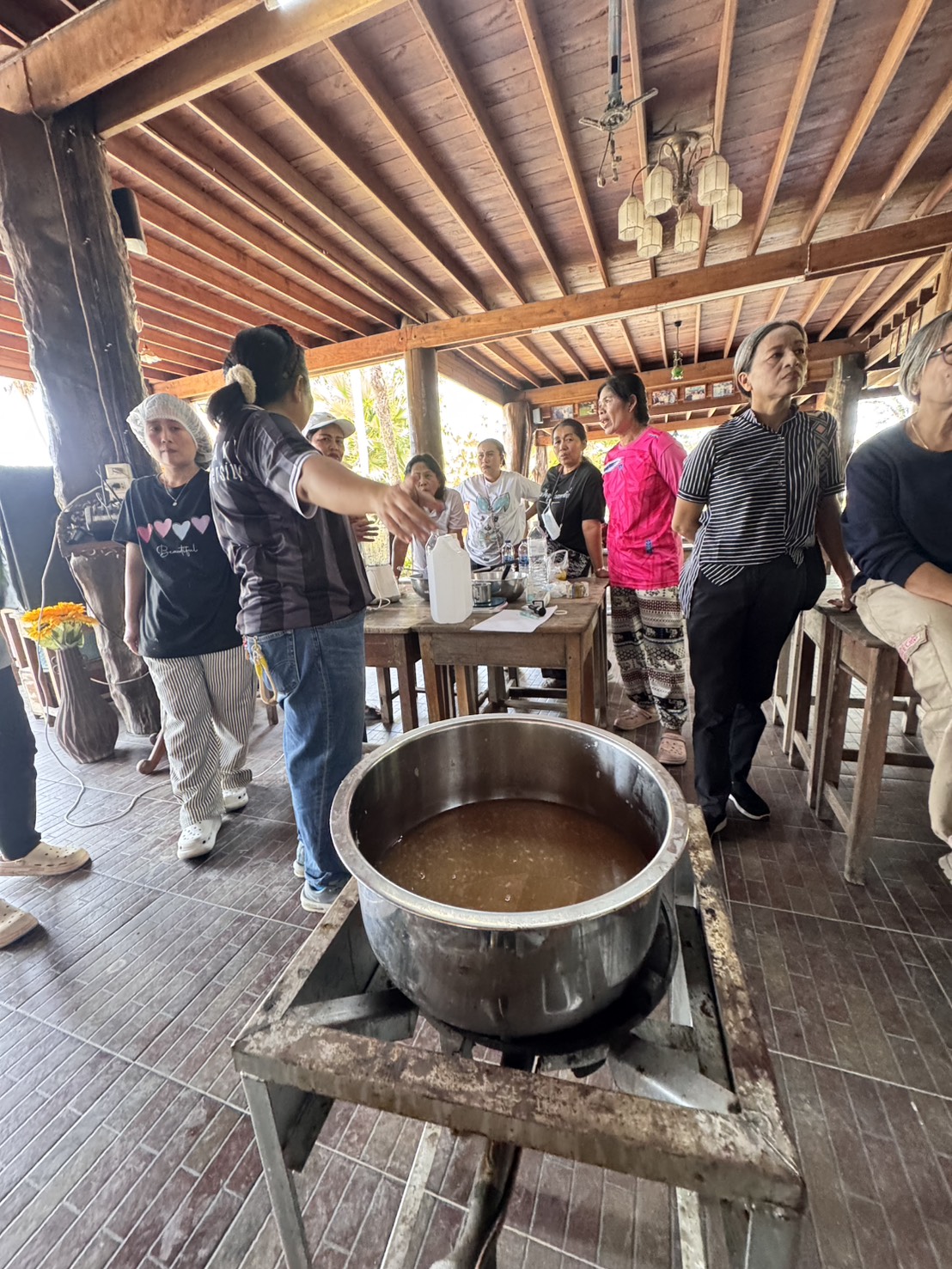
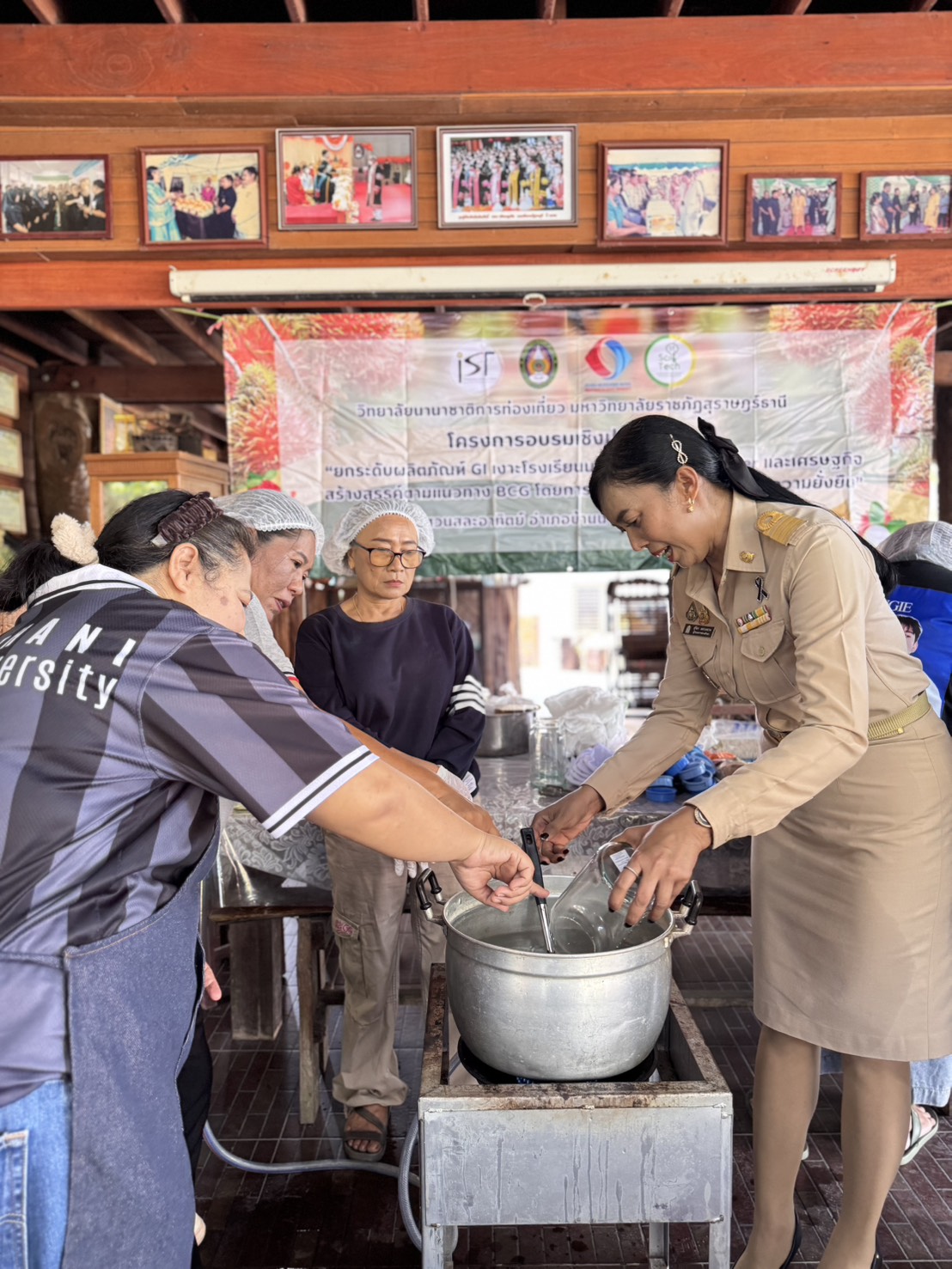
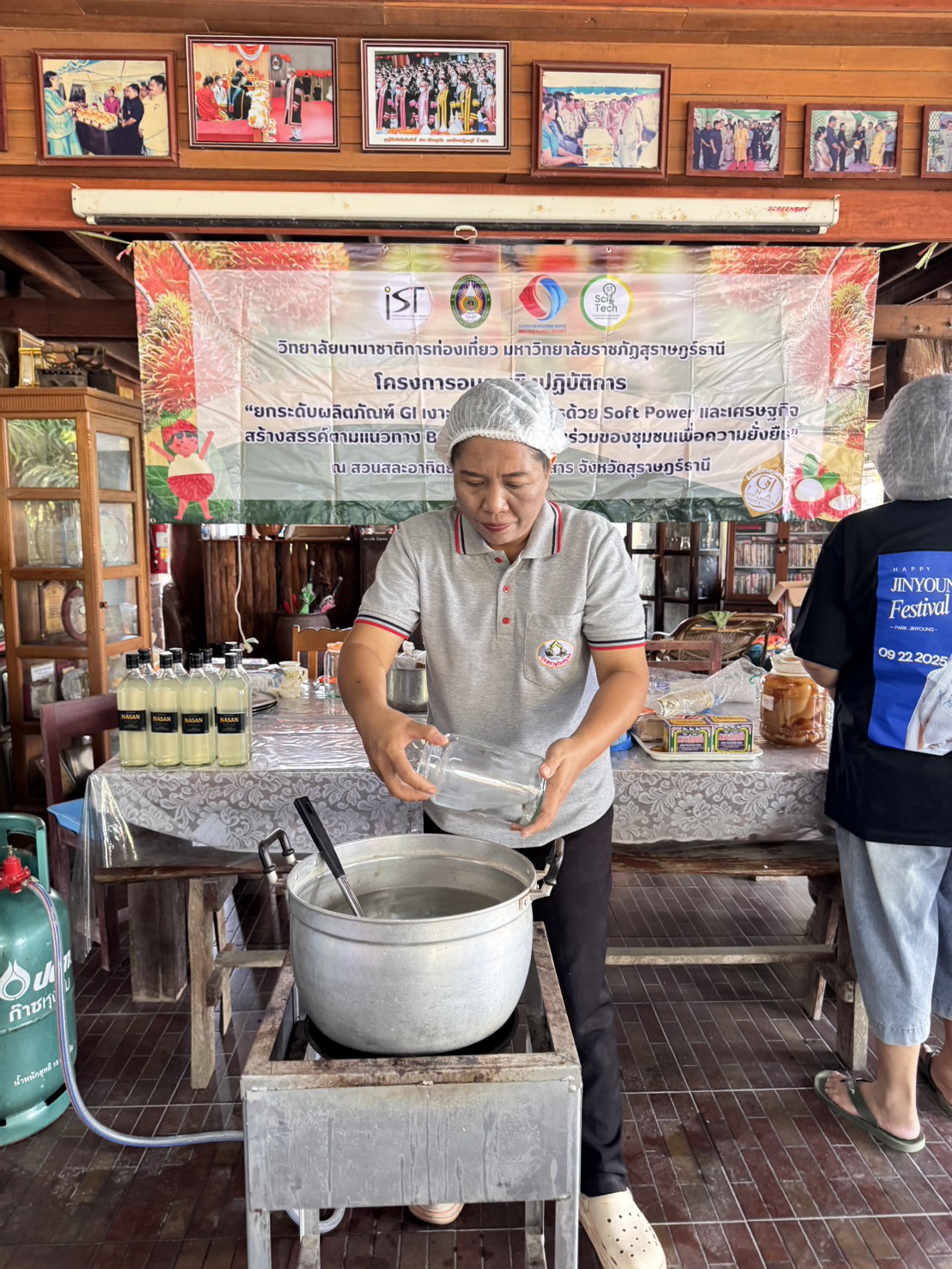
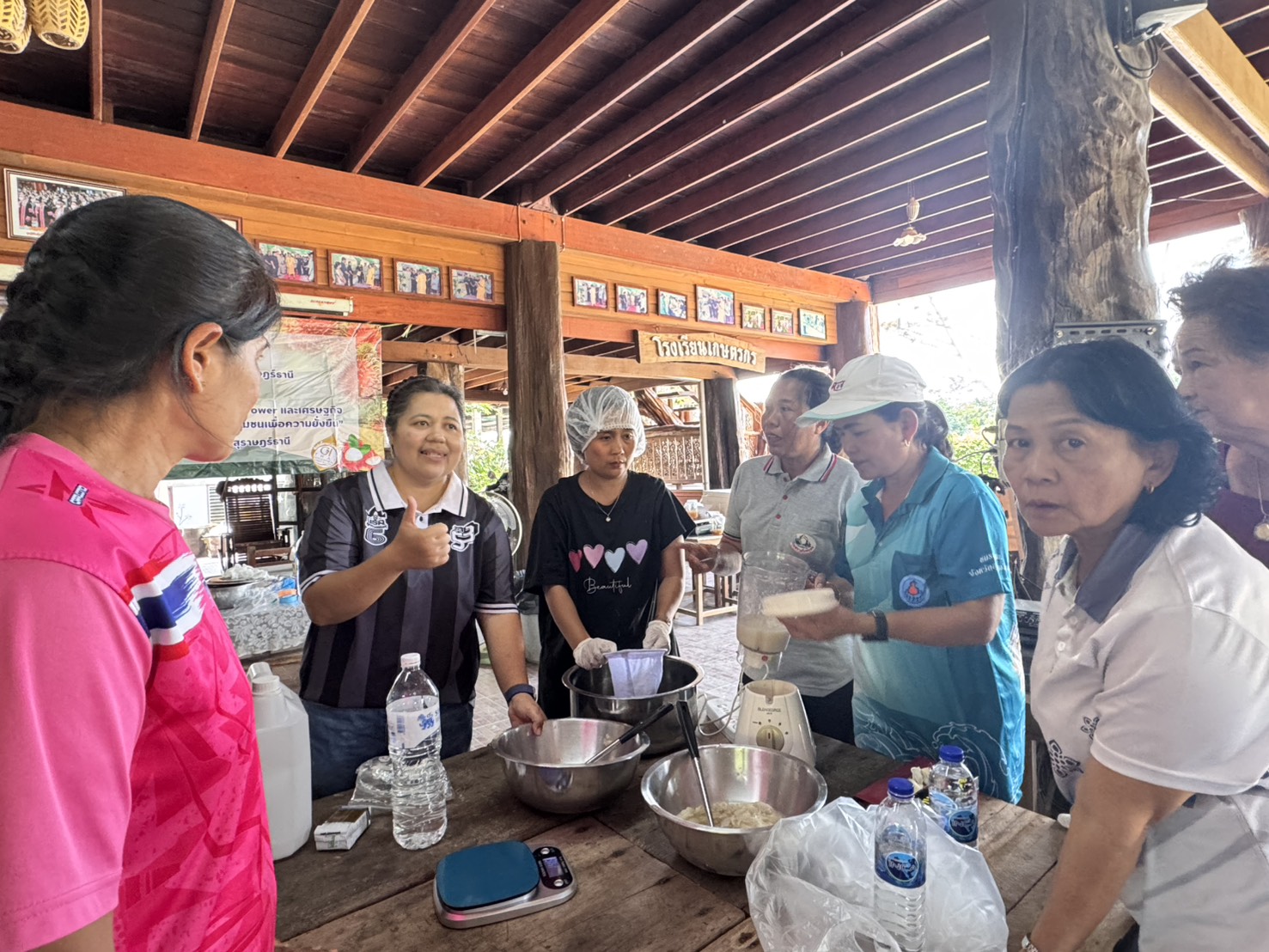
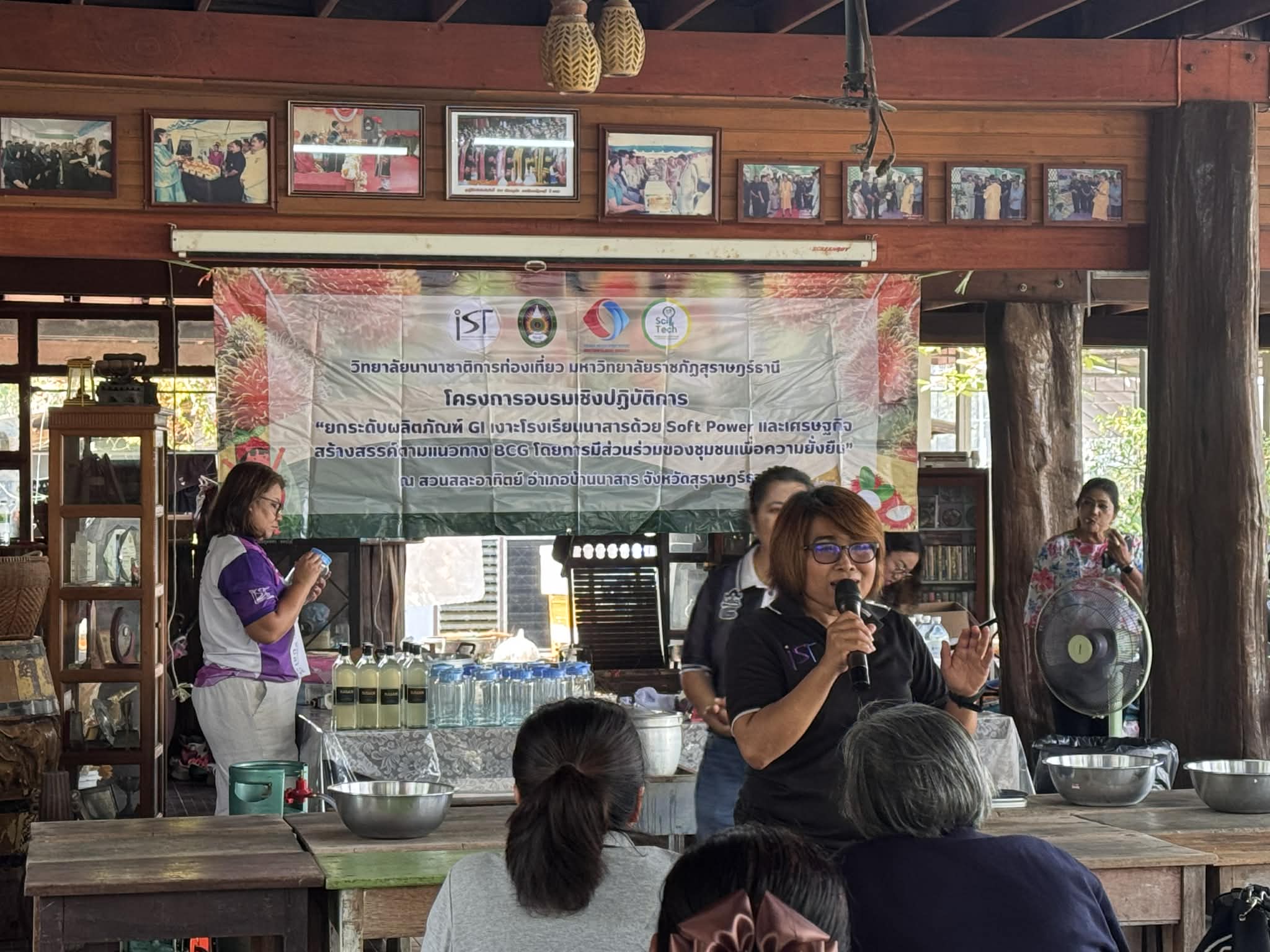
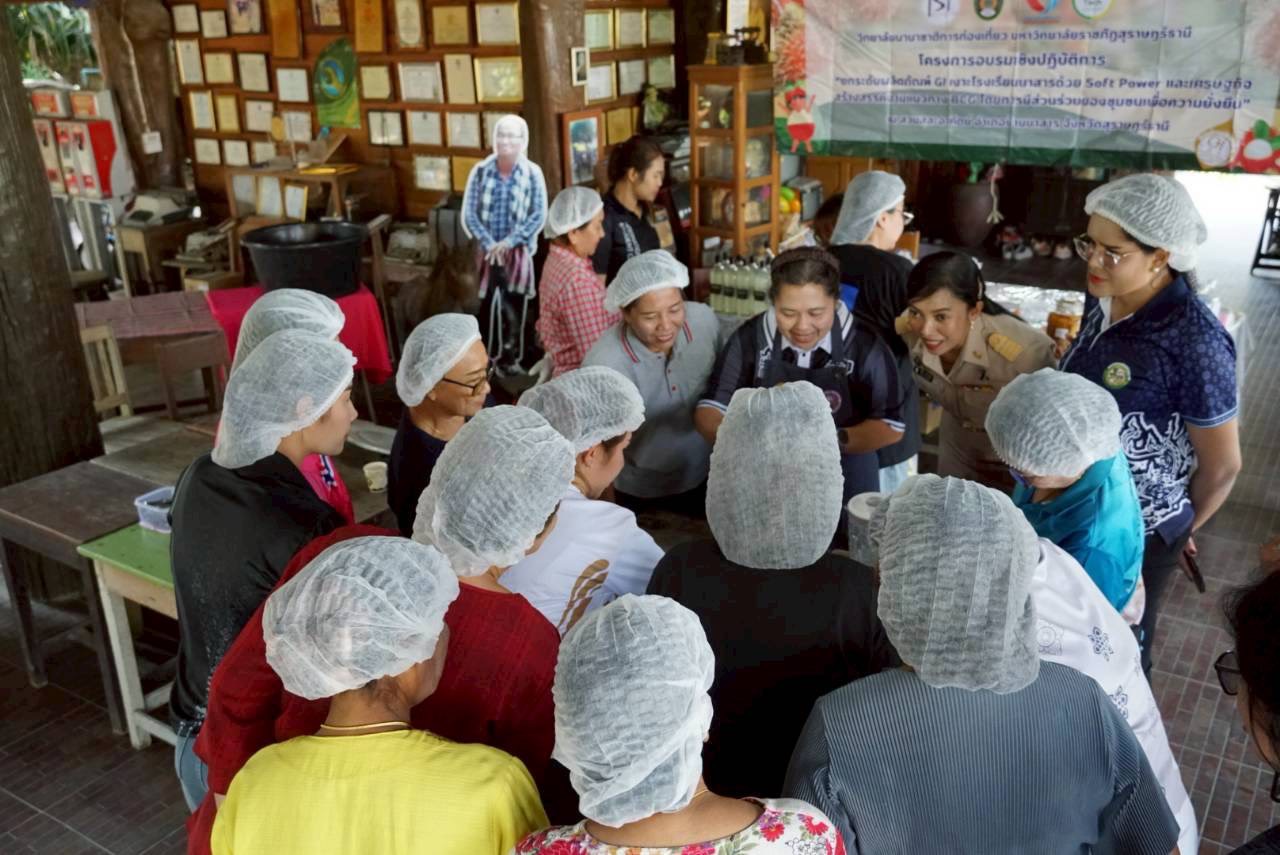
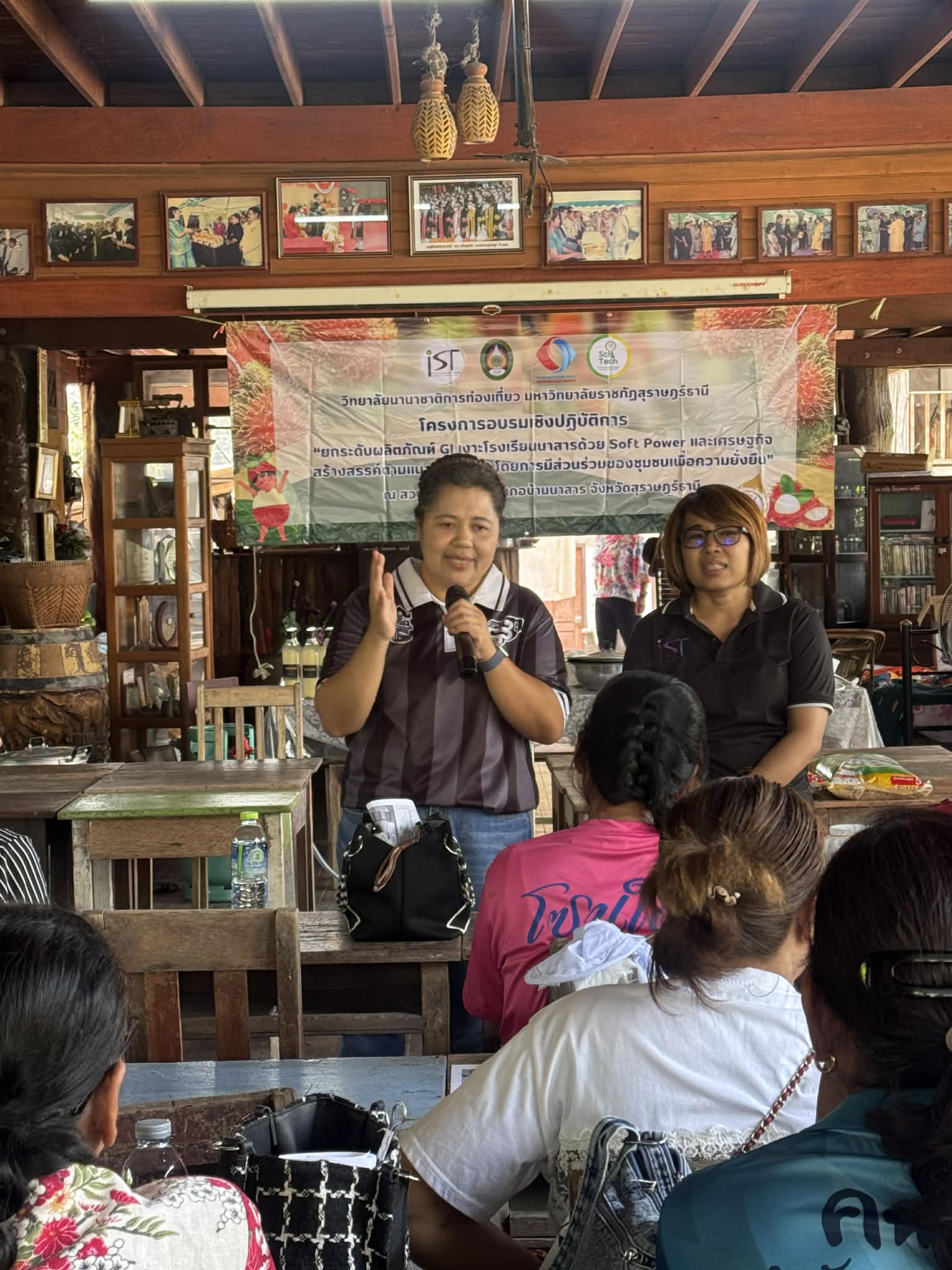
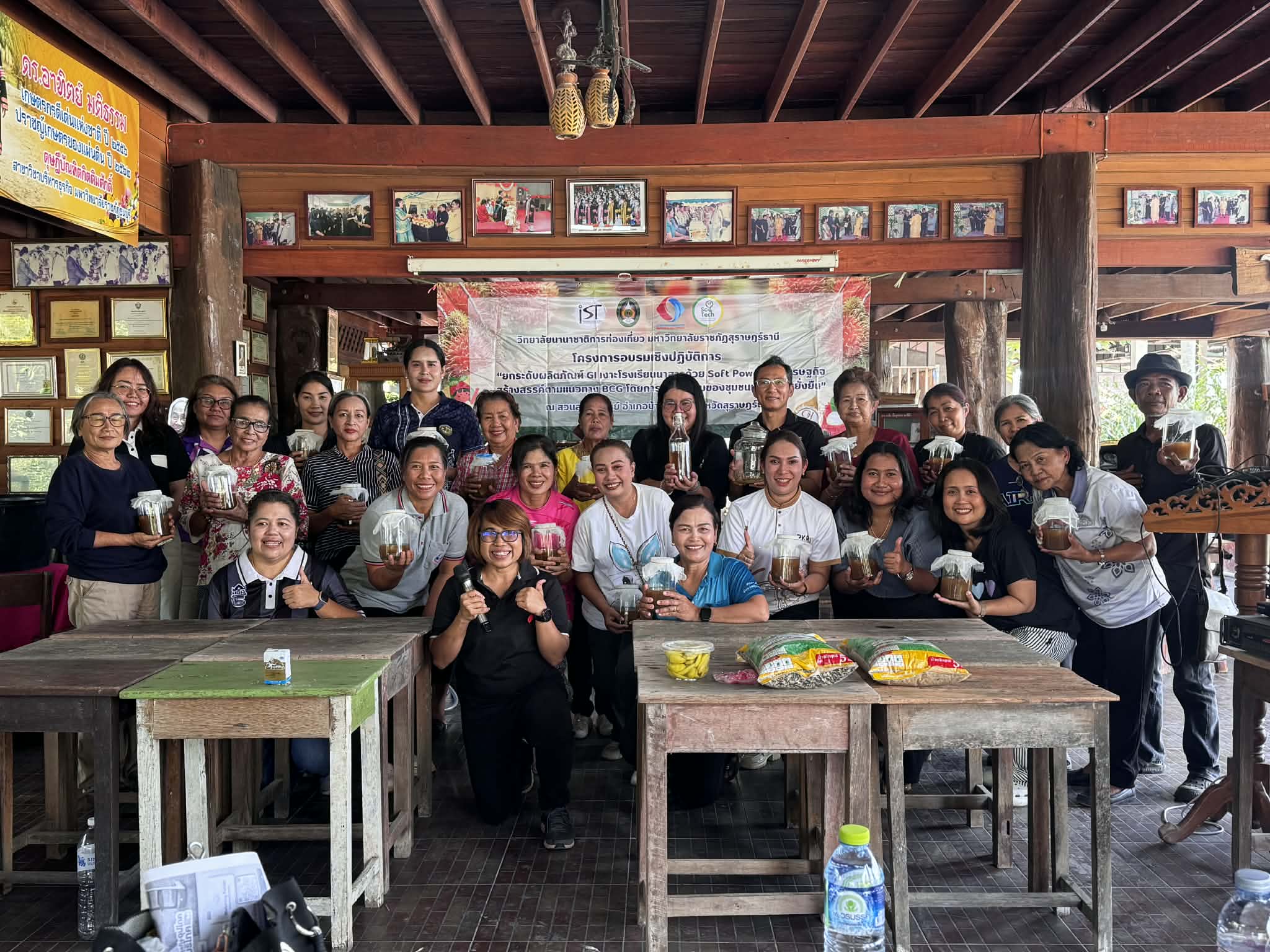
On February 23, 2026, the International School of Tourism, led by Ajarn Jaree Prommana and her team, conducted a hands-on workshop at Suan Sala Athit in Na San District, Surat Thani Province. The activity focused on developing innovative beverages from GI-certified Na San Rambutan as part of the School’s ongoing commitment to community engagement and sustainable product development.
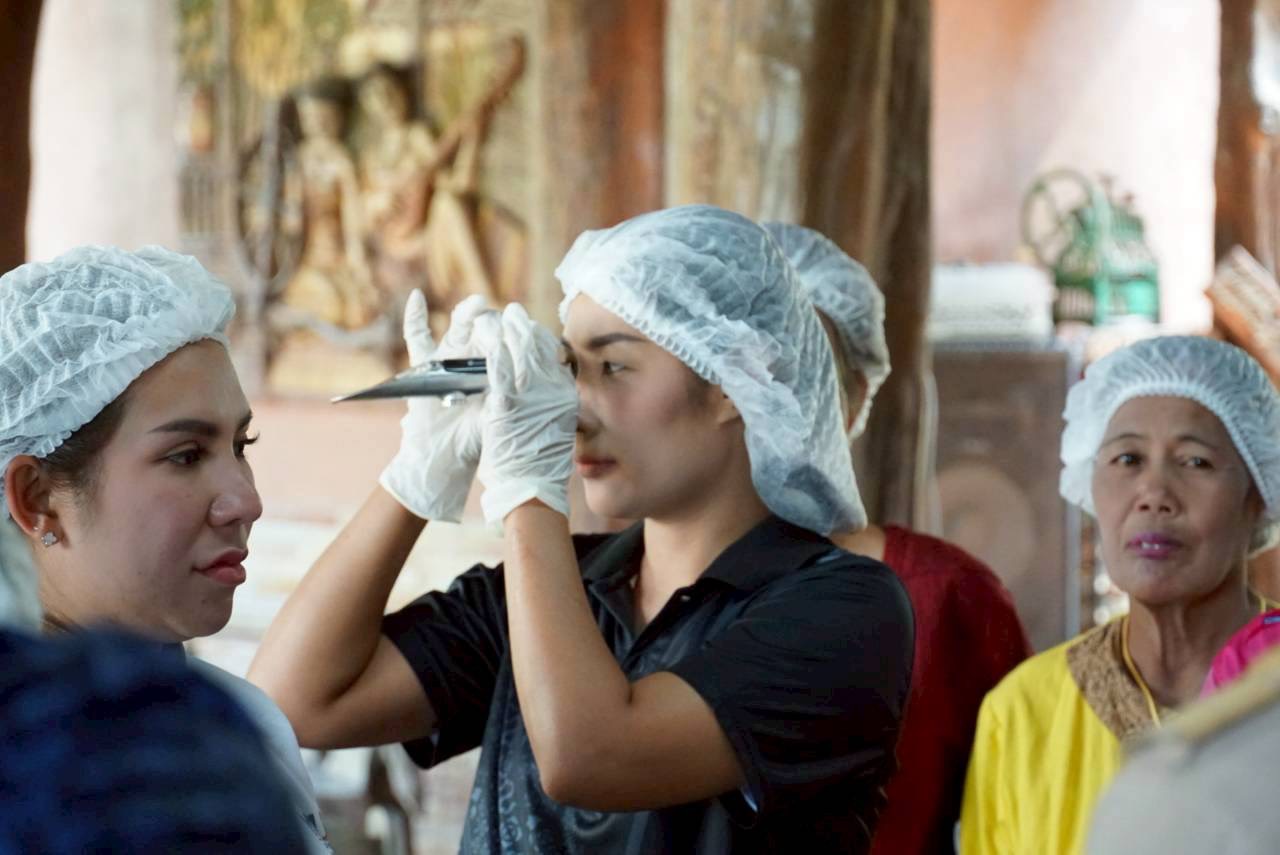
The workshop integrated multidisciplinary knowledge in tourism, hospitality, and product development. Participants received practical training in selecting and preparing quality raw materials, developing distinctive beverage formulations, aligning flavors with market preferences, calculating production costs, setting appropriate pricing strategies, and exploring basic marketing approaches for commercial expansion.
Beyond product development, the initiative aimed to diversify income channels for the community, reduce dependency on fresh produce sales alone, and enhance household-level economic stability. The collaboration reflects a strong partnership between higher education institutions and local communities in fostering sustainable grassroots development.
Relevant Sustainable Development Goals (SDGs)
This project aligns with the University’s mission to serve as a catalyst for local development and directly contributes to the United Nations Sustainable Development Goals (SDGs), particularly:
| Goal | Target Area | Contribution Details |
|---|---|---|
|
SDG 8: Decent Work and Economic Growth | Promoting inclusive local economic growth and income generation through vocational training and value-added product creation. |
|
SDG 12: Responsible Consumption and Production | Encouraging sustainable resource utilization and reducing agricultural waste by transforming surplus produce into high-value items. |
|
SDG 17: Partnerships for the Goals | Strengthening collaboration between higher education institutions and local communities to achieve shared sustainable development objectives. |